
 English
  中文简体
中文简体  Español
Industry News
With the increasing emphasis on infection control and personnel protection in medical environments, disposable medical scrub suits play an increasingl...
READ MORE

 By Admin
Content
The landscape of healthcare is undergoing a quiet but profound revolution, driven by advanced materials and smart design. At the forefront of this change are medical knitting textiles, engineered fabrics that are moving far beyond traditional bandages and gowns. These sophisticated materials are redefining patient comfort, improving clinical outcomes, and enabling groundbreaking therapeutic applications. From seamless compression garments that promote healing to intelligent implants that support tissue regeneration, medical knitting textiles represent a fusion of textile science and medical engineering. This article delves deep into how these innovative fabrics are being utilized, the specific benefits they offer over conventional materials, and the future they are shaping for personalized, effective, and compassionate patient care across various medical disciplines.
Medical knitting textiles are not simply cloth used in a hospital setting. They are precision-engineered structures created using knitting technologies—warp knitting, weft knitting, and circular knitting—that allow for unparalleled control over the fabric's physical properties. This control includes porosity, elasticity, strength, and three-dimensional shape. Unlike woven fabrics, knitted structures can be designed to be highly elastic and conformable, making them ideal for dynamic human bodies. The true power of medical knitting textiles lies in their customizability; they can be fabricated into seamless tubes, complex mesh geometries, or pockets precisely designed to hold medical devices. The materials used range from standard biocompatible polymers like polyester and polypropylene to advanced, resorbable materials such as polylactic acid (PLGA) and specialized silicone elastomers. This foundational versatility enables their application in a vast array of medical scenarios, from external support to internal implants, fundamentally transforming how healthcare providers approach treatment and recovery.
The application of knitted textiles in medicine is diverse and growing. Their ability to be tailored for specific mechanical and biological functions has opened doors in areas where traditional materials have fallen short. In orthopedics and sports medicine, they provide ligament reconstructions and joint stabilizers. In vascular surgery, they become artificial grafts. For chronic conditions and post-surgical recovery, they offer therapeutic compression. Each application leverages the unique attributes of knitting—conformability, strength, and controlled interaction with living tissue. The following sections explore some of the most impactful and common uses, highlighting how these textiles are solving real clinical problems and improving quality of life for patients.
In the realm of wound care, the shift from passive to interactive dressings has been significant. Medical knitting textiles are at the heart of this shift, enabling the creation of advanced wound dressings that actively participate in the healing process. Knitted fabrics can be engineered into multilayer systems: a contact layer that is non-adherent and promotes exudate passage, an absorptive middle layer that manages moisture, and a protective outer layer. For more complex wounds like burns or diabetic ulcers, 3D-knitted spacer fabrics are revolutionary. These textiles have a pronounced depth, creating a cushioning air gap that protects the wound bed from pressure while maintaining a moist healing environment. This is particularly beneficial for post-surgical compression garments for scar management, where consistent, even pressure is needed to minimize hypertrophic scarring, but comfort and breathability are paramount for patient compliance. The precision of knitting allows for gradients in density and pressure, which cannot be achieved with foams or standard felts.
| Wound Type | Traditional Dressing Challenge | Knitted Textile Solution |
|---|---|---|
| Diabetic Foot Ulcers | Poor exudate control, frequent changes needed | 3D spacer fabric manages high exudate, cushions pressure points, can be left in place longer |
| Burn Wounds | Adhesion to wound bed, painful removal | Knitted silicone contact layer is non-adherent, reduces trauma during dressing renewal |
| Post-operative Scars | Rigid sheets cause discomfort and poor compliance | Soft, elastic knitted compression sleeves for lymphedema provide graduated, comfortable pressure for 24/7 wear |
Compression therapy is a cornerstone treatment for venous and lymphatic disorders. The efficacy of this therapy hinges entirely on the garment's ability to deliver a precise, graduated pressure profile—highest at the extremities and gradually decreasing proximally. This is where medical knitting textiles excel. Flat-bed knitting machines can program variations in stitch density and yarn tension across different zones of the garment, creating this medical-grade graduated compression accurately and reproducibly. This technology is vital for conditions like lymphedema, chronic venous insufficiency, and deep vein thrombosis (DVT) prevention. For example, knitted compression sleeves for lymphedema are designed not just to squeeze, but to gently massage and redirect lymphatic fluid, reducing limb volume and preventing fibrosis. Similarly, diabetic socks for swelling and circulation are meticulously knitted to be seamless (to prevent skin breakdown), highly breathable, and to provide mild, supportive compression without constricting bands, which is crucial for patients with peripheral neuropathy and compromised skin integrity.
The benefits extend beyond material disease management. In sports medicine and recovery, medical grade compression sleeves for arthritis provide joint stability, warmth, and proprioceptive feedback without restricting movement. The knit can be designed to be tighter over the joint capsule for support and looser over muscle bellies for freedom. This application demonstrates how knitting translates a therapeutic need—joint support—into a wearable, comfortable, and effective textile solution that patients are more likely to use consistently compared to bulky braces.
Perhaps the most sophisticated application of medical knitting textiles is as permanent or temporary implants within the body. Surgical meshes for hernia repair, pelvic organ prolapse, and soft tissue reinforcement are predominantly knitted. The choice of knit pattern—and whether it is a lightweight, large-pore mesh—directly impacts critical outcomes like flexibility, integration with native tissue, and the reduction of chronic inflammation and pain. A well-designed knitted mesh provides immediate mechanical support while serving as a scaffold for the patient's own cells to colonize and rebuild stronger, natural tissue. In the field of regenerative medicine, researchers are developing bioabsorbable knitted scaffolds from materials like P4HB. These bioabsorbable knitted scaffolds for soft tissue repair are engineered to provide temporary structural support in areas like rotator cuff tears or abdominal wall reconstruction. Over 12-18 months, the scaffold safely degrades as the body's new tissue matures, leaving behind no permanent foreign material—a paradigm shift in implant philosophy.
| Implant Type | Key Material & Knit Property | Clinical Advantage |
|---|---|---|
| Hernia Repair Mesh | Lightweight, large-pore polypropylene knit | Reduces foreign body reaction, improves flexibility, minimizes chronic pain risk |
| Rotator Cuff Repair Scaffold | Bioabsorbable P4HB knitted mesh | Provides reinforcement during healing, then dissolves, avoiding stress-shielding of natural tendon |
| Cardiac Support Device | Elastic, conformable polyester knit | Wraps the heart to limit ventricular dilation in heart failure, adapting to the heart's motion |
The next frontier for medical knitting textiles lies in integration with digital technology and personalized manufacturing. "Smart" knitted textiles are emerging, where conductive yarns are integrated into the knit structure to create sensors that can monitor physiological parameters like pressure, strain, temperature, or even bioelectrical signals directly from the skin. Imagine a post-surgical compression garment for scar management that also monitors for signs of infection via localized temperature changes, or a knitted compression sleeve for lymphedema that provides real-time feedback on usage and pressure efficacy to a patient's smartphone. Furthermore, with the advent of digital knitting and 3D body scanning, the future points toward fully personalized medical textiles. Garments and implants will be designed from a patient's specific anatomical scan and knitted to exact dimensions and mechanical requirements, optimizing fit, comfort, and therapeutic outcome in a way mass-produced items never could. This convergence of textiles, data, and personalized design will solidify the role of knitted fabrics as essential, intelligent tools in proactive and precision healthcare.
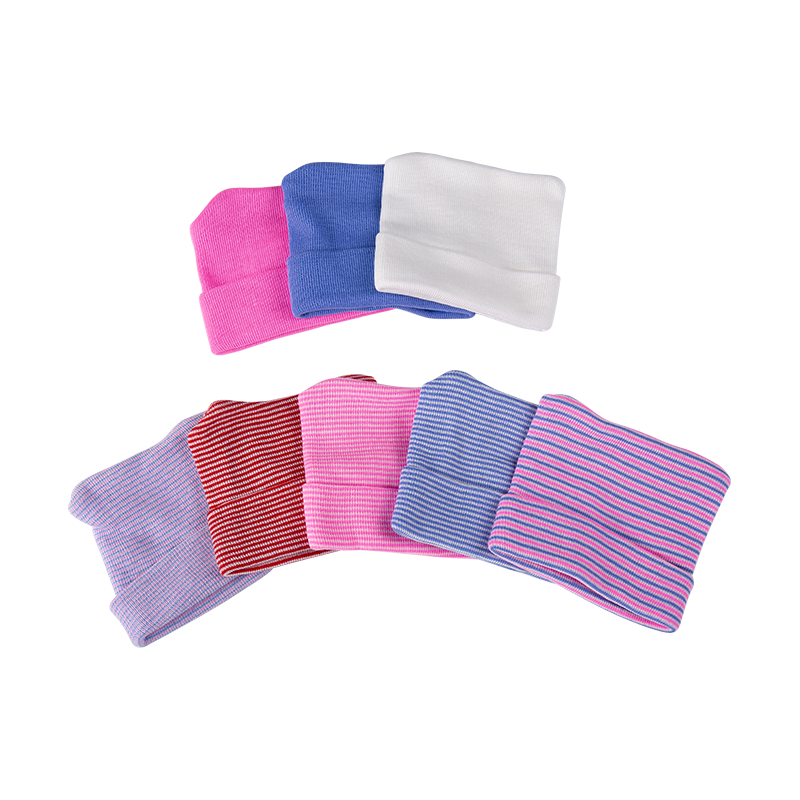
The primary advantages stem from the inherent properties of knitted structures. Knitted fabrics are generally more elastic, conformable, and breathable than their woven counterparts. This elasticity allows for excellent dynamic fit on moving body parts without restricting circulation—a critical feature for medical grade compression sleeves for arthritis or recovery garments. Their conformability ensures even pressure distribution and reduces the risk of pressure points, which is essential for managing conditions like lymphedema with knitted compression sleeves for lymphedema. Furthermore, knitting technology enables seamless construction, complex 3D shapes, and precise engineering of porosity and zones with different properties within a single textile piece. This level of design and functional integration is very difficult to achieve with woven fabrics, making knits superior for advanced applications like implantable meshes and bioactive wound dressings.
Selecting the right garment is key to both efficacy and safety. First and foremost, consult with a healthcare professional (doctor, physical therapist, certified fitter) to get a proper assessment and prescription for the correct compression class (measured in mmHg). Once prescribed, look for garments made from quality medical knitting textiles. Key features include: Graduated Compression: Ensure the product is labeled as such. Proper Fit: This often requires precise measurements taken at multiple points on the limb. Ill-fitting compression can be harmful. Material and Construction: Seek breathable, moisture-wicking fibers and seamless construction, especially for diabetic socks for swelling and circulation, to prevent skin irritation. Intended Use: Garments are designed for specific conditions—a sleeve for post-surgical compression garments for scar management differs from one for medical grade compression sleeves for arthritis. Finally, consider donning aids if hand strength or dexterity is an issue, as proper application is part of effective therapy.
With the increasing emphasis on infection control and personnel protection in medical environments, disposable medical scrub suits play an increasingl...
READ MOREWhy are material quality and barrier protection crucial in a disposable cardiovascular surgical drape pack? The efficacy of disposable cardiovascular ...
READ MOREThe Importance of Disposable Obstetrics Drapes Packs In modern delivery practices, the disposable obstetrics drapes pack has become a crucial tool for...
READ MOREThe Critical Role of Medical Gowns in Healthcare In the dynamic and often hazardous environment of a healthcare facility, medical gowns serve as a pri...
READ MORE
 This website is intended for regions outside of China.