
 English
 中文简体
 Español

Industry News
Home / News / Industry News / Baby Medical Knitting Factory Guide: Sourcing Infant Caps and Blankets


 By Admin
Content
A NICU nurse opens a sterile pack at three in the morning, lifts out a small cotton cap and checks one thing before it touches a newborn: does it still hold its shape after the last wash and steam cycle? That single gesture explains why infant caps and blankets are ordered from a baby medical knitting factory and not from a gift catalogue. The knitting looks simple. The supply chain behind it is not. Yarn count, stitch density, elastic recovery, packing method and batch records all have to line up before a hospital will place a repeat order.
Knitted baby items sit inside a wider medical knitting family, and buyers who understand that structure negotiate better. The baby segment usually covers two core items: infant caps and infant blankets, used in delivery rooms, postpartum wards and neonatal units. The universal segment covers ear loops, medical knitted cuffs and stockinette sleeve rolls, and it extends into waterproof elastic stockinette and TPE stockinette that are sold as accessories for surgical packs.
That combination is not accidental. Jiangsu Dingshun Medical Products started producing knitted cuffs in 2002 and later built outward from those base components into infant knitting, medical gowns and procedure-specific packs, shipping to more than 33 countries across North America, Europe, Japan and Korea. The logic runs from base component to single consumable to assembled pack, and baby knitting sits at the base of that pyramid.
 Newborn Medical Knitted Infant Caps for Head Coverage and Temperature MaintenanceKnitted cotton-polyester newborn caps in pink, blue, or white, sized 10.5 cm by 14.5 cm, with spec details that matter for neonatal use.View Product →
What separates a medical cap from a retail baby hat is discipline in three areas: fiber shedding, elastic behaviour in the band, and documentation. A cap that sheds lint in a neonatal incubator creates a cleaning burden and, in some units, a compliance question. A cap whose band relaxes after two washes slides off during transfer. Neither problem appears in a photograph, which is why the specification sheet matters more than the sample photo.
Newborn skin is thin, permeable and easily irritated, and neonatal patients cannot report discomfort. That reality pulls knitted caps and blankets into the same quality system as other single-use items: incoming yarn inspection, in-process stitch checks, defined batch records and packaging that protects the product between the factory and the ward.
The practical consequences for purchasers are straightforward. Suppliers should be able to show a quality management system such as ISO 13485, skin-contact biocompatibility evidence consistent with ISO 10993 expectations, and the regulatory route for the destination market, whether that is CE marking supported by an MDR technical file, or another regional pathway. Origin marking, material declarations and latex-free statements increasingly travel with the shipment, and a factory that has already obtained MDR certification has usually built those habits into its paperwork rather than bolting them on at the container.
One more factor is easy to overlook. Sterile packed items that include knitted parts, such as procedure packs, require the knit to survive the sterilisation method chosen for the pack. Ethylene oxide runs are generally kind to cotton, while radiation and steam cycles punish weak yarns and unstable dyes. Confirm the sterilisation route before you approve the knit.
Most infant caps are made from 100 percent cotton or cotton-rich blends, knitted as single jersey or rib with an elasticised band. Blankets typically use interlock, rib or brushed jersey, sometimes with a polyester blend for dimensional stability. For both, the first questions to ask are the fiber content, the finished fabric weight and the shrinkage allowance, because those three values decide whether the item still fits on day ten.
Cotton is breathable and soft against newborn skin, and it takes steam sterilisation well. Blends improve shape retention and reduce the cost per unit, but they lower moisture regain and can feel warmer. Where a band needs to stay put, a small percentage of spandex is normal, and the supplier should be able to state the recovery percentage rather than describing the band as elastic. Buyers who want background reading on how these materials behave in care settings can review the baby medical knitting materials and use specifications published by the manufacturer.
A cap is a functional item. It should cover the scalp without pressing, stay in place during feeding and transfer, and tolerate repeated handling by gloved hands. Tender documents often specify a relaxed circumference range across newborn and infant sizes, a minimum elastic recovery, and a maximum shrinkage figure after three washes. Decorative knots, long loose threads and stiff seams are the usual sources of complaints.
Blankets are judged on warmth, drape and heat retention rather than thickness alone. A denser fabric can trap more heat than a neonatal patient needs, so the fabric weight and air permeability deserve as much attention as softness. Hem finishing matters too: folded and stitched edges survive laundering better than overlocked edges, which fray and release fiber with every cycle.
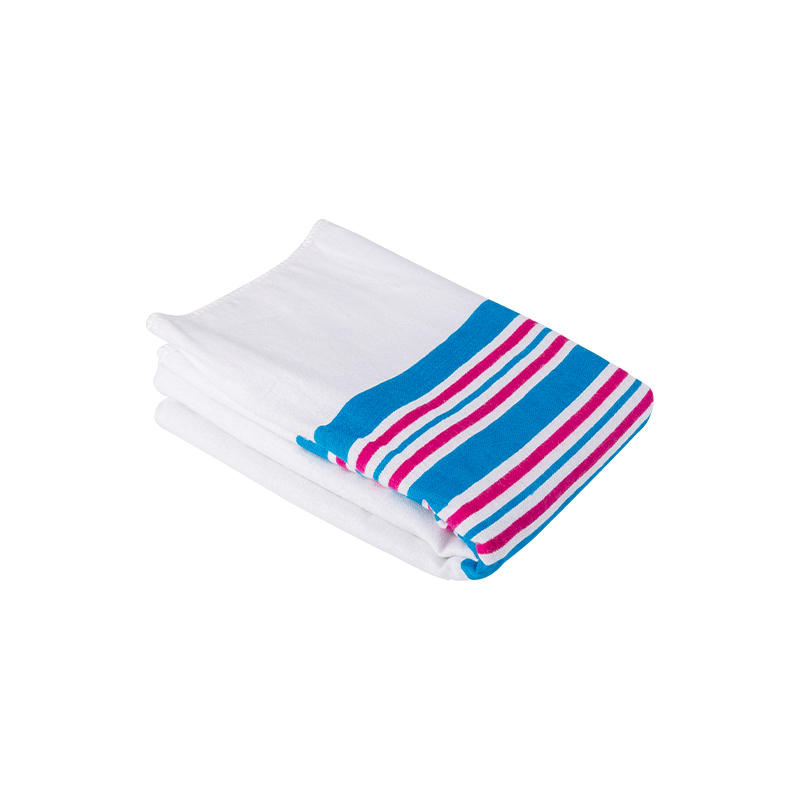 Custom Cotton Infant Blankets for Newborn Wrapping and WarmthCotton infant blankets, 75 cm by 100 cm, in white, pink, or blue, for newborn wrapping; hem finishing and fabric weight matter.View Product →
Vague specifications produce disputes that sampling alone will not settle. The table below lists windows commonly used for knitted newborn items; treat them as a starting point for discussion and confirm final values against your clinical requirements and your supplier's validated data.
| Parameter | Typical window | What it protects |
|---|---|---|
| Relaxed cap circumference | 28-36 cm across newborn to infant sizes, plus or minus 1 cm | Fit without pressure marks or slipping |
| Blanket fabric weight | 140-220 gsm | Warmth without excessive heat retention |
| Band elastic recovery | 90 percent or higher after five stretch cycles | Cap stays seated during handling |
| Shrinkage after three washes at 60 C | 5 percent maximum | Ward fit matches the approved sample |
| pH of water extract | 4.0-7.5 | Lower risk of skin irritation |
| Rub colourfastness | Grade 4 or better | No dye transfer onto damp skin or linen |
| Lint and particle shedding | Low, verified by an agreed test method | Cleaner handling in neonatal units |
Knitted components rarely stay standalone for long. Stockinette sleeve rolls and elasticised knit tubes are used to wrap limbs, secure dressings and cushion pressure points, and the same items appear on the bill of materials for procedure packs. A knitted cuff may leave the factory as a finished saleable item today and as a component inside a laparotomy or caesarean pack tomorrow.
That dual role is an advantage for buyers, because it concentrates capability in one place. A supplier that knits its own components controls yarn lot consistency, stitch parameters and lead time rather than depending on an outside knitter. It also shortens the route to pack assembly, since the knit does not have to travel between sites and be re-inspected. When a hospital standardises on a knitted accessory across departments, a single qualified source can cover both the loose item and the packed version.
 Medical Knitted Cuffs for Surgical Gowns and Universal Medical KnittingSoft, tight knitted cuffs for medical and surgical gowns, in cotton, cotton-polyester, or polyester, 5 cm wide, raw or bleached white, non-sterile.View Product →
Procurement works best when the steps run in a fixed order, because each one filters out a class of supplier early.
Most sourcing problems do not show up in the first delivery. They surface once production rhythm replaces pilot attention.
Each of these is manageable if the specification sheet names a number, a test method and an owner. None of them is manageable through email reassurance.
A baby medical knitting factory is judged less by its machines than by the discipline wrapped around them: yarn control, stitch consistency, measured elasticity, traceable batches and packing that respects the end use. Jiangsu Dingshun Medical Products has been knitting medical components since 2002, now covering infant caps, infant blankets, knitted cuffs, stockinette and procedure packs for hospitals and distributors in more than 33 countries. If you are specifying knitted newborn items, start from the clinical scenario, put numbers into the contract, and let the samples prove the numbers before the volume order is signed.
With the increasing emphasis on infection control and personnel protection in medical environments, disposable medical scrub suits play an increasingl...
READ MOREWhy are material quality and barrier protection crucial in a disposable cardiovascular surgical drape pack? The efficacy of disposable cardiovascular ...
READ MOREThe Importance of Disposable Obstetrics Drapes Packs In modern delivery practices, the disposable obstetrics drapes pack has become a crucial tool for...
READ MOREThe Critical Role of Medical Gowns in Healthcare In the dynamic and often hazardous environment of a healthcare facility, medical gowns serve as a pri...
READ MORE
 This website is intended for regions outside of China.