
 English
  中文简体
中文简体  Español
Industry News
With the increasing emphasis on infection control and personnel protection in medical environments, disposable medical scrub suits play an increasingl...
READ MORE

 By Admin
Content
A protective isolation gown is a medical protective garment designed to reduce the risk of contamination of the wearer's skin and clothing during patient care and other activities involving potentially infectious materials. Its protection comes from the combined performance of the fabric, garment coverage, sleeves, cuffs, seams, closures, and overall fit. The appropriate gown should therefore be selected according to the actual exposure conditions rather than by appearance or material thickness alone.
In healthcare environments, potential exposure can occur through direct contact with patients, contaminated surfaces, blood, body fluids, secretions, or excretions. A properly designed gown creates a physical barrier between these sources and the wearer's clothing and exposed skin. The level of protection required depends on the specific task and the anticipated type and degree of exposure.
The main function of an isolation gown is to provide appropriate coverage of areas that may come into contact with potentially contaminated materials. The front of the body and the arms are particularly important because they frequently approach the patient, equipment, and surrounding surfaces.
The garment should provide adequate coverage without unnecessarily restricting movement. A gown that is too small may create gaps or excessive tension, while a gown that is too large may interfere with equipment, movement, or correct PPE handling.
The torso is one of the main areas protected by an isolation gown because the front of the body can be exposed to splashes, contact with contaminated surfaces, and fluid transfer during patient care.
Garment length should provide adequate coverage for the intended activity. When the wearer bends or sits, the gown may shift relative to the body. The pattern and rear construction should therefore allow sufficient overlap and coverage during normal movement.
|
Torso Design Factor |
Primary Function |
What to Evaluate |
|
Front length |
Protects the front of the body |
Coverage during standing, reaching, and bending |
|
Torso width |
Allows body movement while maintaining coverage |
Fit and movement allowance |
|
Back overlap |
Reduces exposed areas during movement |
Coverage while sitting and bending |
|
Side seams |
Connect front and rear panels |
Mechanical and structural integrity |
|
Closures |
Maintain garment position |
Secure fastening and appropriate adjustment |
Sleeve construction is important because healthcare workers frequently use their arms when interacting with patients, instruments, equipment, and contaminated surfaces. The sleeve should provide sufficient coverage without restricting elbow and shoulder movement.
Long sleeves may extend toward the wrist and provide a more continuous transition into gloves. The lower sleeve, cuff, and glove should be considered together when evaluating protection around the wrist.
A Isolation gown should be evaluated according to both its physical coverage and its tested barrier performance. These two factors answer different questions: coverage determines where the garment provides protection, while barrier performance helps determine how effectively the material resists specified liquid exposure.
|
Evaluation Factor |
What It Describes |
Technical Evidence |
|
Physical coverage |
Areas of the body covered by the garment |
Garment dimensions and construction |
|
Liquid barrier performance |
Resistance to specified liquid penetration |
Applicable standardized testing |
|
Seam performance |
Integrity of joined garment sections |
Seam construction and applicable testing |
|
Closure performance |
Protection around garment openings |
Closure design and attachment strength |
|
Fit during movement |
Ability to maintain coverage during activity |
Dimensional and ergonomic evaluation |
Where ANSI/AAMI PB70 classification is applicable, protective apparel is divided into four liquid-barrier levels. The levels provide a framework for relating tested performance to expected exposure conditions.
|
Barrier Level |
General Exposure Category |
Primary Test Focus |
|
Level 1 |
Minimal liquid exposure |
Water impact penetration |
|
Level 2 |
Low liquid exposure |
Water impact and hydrostatic pressure |
|
Level 3 |
Moderate liquid exposure |
Water impact and higher hydrostatic pressure |
|
Level 4 |
High liquid exposure |
Resistance to penetration by synthetic blood and specified pathogen-related testing |
These classifications should be used as a technical selection framework rather than as a universal ranking. A higher barrier level is not automatically necessary for every healthcare activity. The appropriate level depends on the anticipated exposure and the requirements of the intended application.
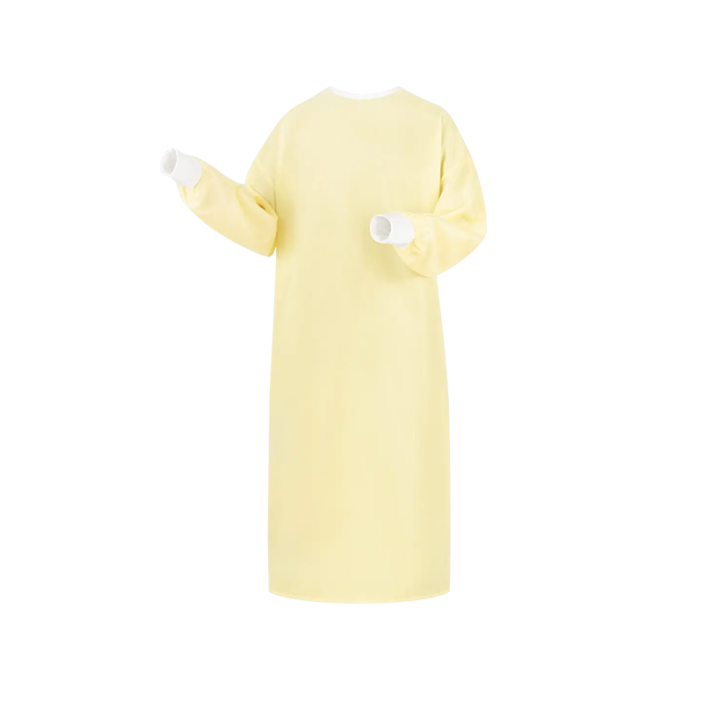
The protective scope of an isolation gown is influenced by its construction details as much as by the main fabric. Seams connect garment panels, while closures control openings and garment positioning. If these areas are poorly designed, they can become points of reduced protection.
|
Construction Element |
Protection Role |
Key Evaluation Point |
|
Main fabric |
Primary physical barrier |
Liquid resistance and mechanical properties |
|
Seams |
Connect protective panels |
Strength and barrier continuity |
|
Cuffs |
Protect wrist transition areas |
Stability and glove compatibility |
|
Closures |
Maintain garment configuration |
Secure fastening and coverage |
|
Hood connection |
Extends protection to head and neck |
Seam integrity and coverage continuity |
A Isolation gown should maintain its intended coverage when the wearer moves. Static dimensions cannot fully represent practical performance because healthcare activities commonly include reaching, bending, sitting, turning, and patient handling.
|
Movement |
Gown Area Affected |
What to Evaluate |
|
Reaching forward |
Shoulders and sleeves |
Coverage and seam stress |
|
Bending |
Back and front torso |
Garment displacement and overlap |
|
Sitting |
Back and lower hem |
Coverage retention |
|
Arm rotation |
Sleeves and cuffs |
Wrist coverage and sleeve stability |
|
Head movement |
Hood and neckline |
Coverage, visibility, and stability |
A suitable garment should provide enough freedom of movement to perform the intended task while avoiding excessive material that could interfere with equipment or other PPE.
|
Design Feature |
Protection Scope |
Main Trade-Off to Consider |
|
Standard neckline |
Primarily torso protection |
Additional head and neck PPE may be required |
|
Long sleeves |
Extends protection toward the wrists |
Requires appropriate sleeve fit and cuff design |
|
Integrated hood |
Extends coverage to the head and neck |
Must remain compatible with face and respiratory PPE |
|
Extended back coverage |
Improves protection during bending and sitting |
May increase material volume and heat retention |
|
Higher barrier material |
Greater resistance to specified liquid exposure |
May influence breathability and flexibility |
For B2B procurement, the following parameters can be included in a technical specification or supplier evaluation checklist:
The required protection scope should be based on the actual clinical activity. Routine patient care may require adequate torso and arm coverage, while tasks involving substantial splashing or broader contamination potential may justify a more extensive garment configuration.
For applications where head and neck exposure is reasonably anticipated, an integrated hood can expand the covered area. However, the hood should still be evaluated together with masks, respirators, goggles, face shields, and other PPE required for the specific task.
The correct Isolation gown is therefore not necessarily the gown with the greatest amount of material or the highest barrier classification. It is the gown whose coverage, barrier performance, construction, fit, and PPE compatibility appropriately match the expected exposure.
A Isolation gown provides a physical barrier between healthcare personnel and potential sources of contamination, with its effectiveness determined by both protection scope and garment performance. Torso coverage, sleeve length, cuffs, closures, seams, hood configuration, fit, and barrier characteristics should be evaluated as an integrated system.
For professional procurement, the most reliable approach is to first identify the anticipated exposure and then define the required coverage and performance parameters. This ensures that the selected Isolation gown provides appropriate protection without unnecessarily compromising mobility, comfort, or compatibility with the rest of the PPE ensemble.
The appropriate Isolation gown should be selected according to the type, intensity, and duration of exposure expected during the task. Contact with patients, contaminated surfaces, blood, body fluids, splashes, sprays, and other potentially infectious materials can create different levels of exposure risk. A gown that is suitable for routine patient care may not provide the same level of protection required during a fluid-intensive procedure.
Risk-based selection should therefore begin with the actual working environment. The main factors include the source of exposure, the amount of fluid, the pressure or force involved, the direction of exposure, the duration of contact, and the body areas that may be affected.
Healthcare personnel can encounter potentially contaminating material through several exposure routes. Identifying the dominant route helps determine the appropriate gown coverage and barrier performance.
|
Exposure Route |
Typical Condition |
Primary Gown Consideration |
|
Direct contact |
Physical contact with a patient or contaminated material |
Adequate torso and arm coverage |
|
Indirect contact |
Contact with contaminated equipment, surfaces, or clothing |
Coverage of exposed clothing and frequently contacted areas |
|
Splash |
Liquid reaches the garment in droplets or irregular bursts |
Appropriate liquid resistance and sufficient coverage |
|
Spray |
Liquid is distributed over a wider area or with greater force |
Higher barrier performance and coordinated face protection |
|
Prolonged contact |
Extended exposure to wet or contaminated materials |
Sustained barrier performance and material durability |
Exposure conditions can be divided into practical risk categories to support procurement and PPE planning. These categories should be used as a selection framework rather than as a substitute for the applicable technical classification.
|
Exposure Category |
Typical Characteristics |
Gown Selection Priority |
|
Low exposure |
Limited contact with potentially contaminating material and little expected liquid exposure |
Coverage, fit, comfort, and appropriate basic barrier performance |
|
Moderate exposure |
Regular possibility of contact with blood, body fluids, or contaminated materials |
Improved liquid resistance, sleeve protection, seam integrity |
|
High exposure |
Substantial splash, spray, or prolonged fluid contact |
Higher verified barrier performance and comprehensive coverage |
The correct protection level should correspond to the anticipated exposure rather than automatically selecting the highest available level. Excessive barrier protection can add garment weight, reduce breathability, and restrict movement, while insufficient protection can leave the wearer exposed to preventable risks.
The amount of liquid that may reach a gown is an important selection factor. A small incidental splash creates a different challenge from continuous exposure to a substantial volume of fluid.
Procurement teams should consider both the volume and the intensity of exposure. A relatively small amount of liquid delivered under force can create a more demanding barrier challenge than a larger amount of liquid that contacts the gown gradually.
|
Exposure Characteristic |
Lower-Demand Condition |
Higher-Demand Condition |
|
Liquid volume |
Small quantity or occasional contact |
Large quantity or repeated exposure |
|
Fluid pressure |
Low-pressure contact |
Higher pressure or forceful exposure |
|
Exposure frequency |
Occasional |
Repeated throughout the procedure |
|
Contact duration |
Short |
Extended or sustained |
|
Exposure area |
Localized |
Broad or unpredictable |
Not all exposure risks involve liquid penetration. During patient care, healthcare personnel may touch contaminated equipment, bed surfaces, furniture, instruments, or other materials. In these situations, coverage and garment fit are particularly important because the gown functions primarily as a physical barrier against contact contamination.
The garment should cover the areas most likely to come into contact with the patient or contaminated environment. Long sleeves can extend protection across the forearms, while appropriate front and back coverage can reduce contamination of underlying clothing.
Splash and spray exposure require a more careful assessment because liquid can reach areas that are not normally exposed during routine patient contact. The front of the gown may receive direct impact, while the sleeves, shoulders, neck, and head may also be affected depending on the procedure.
When splashing or spraying is anticipated, gown selection should be coordinated with eye, face, and respiratory protection where applicable. A protective gown cannot replace dedicated protection for the eyes, nose, or mouth.
|
Potential Exposure Area |
Required Protection Consideration |
Additional PPE Consideration |
|
Torso |
Appropriate liquid barrier |
Gown coverage |
|
Forearms |
Long-sleeve coverage and stable cuffs |
Glove overlap |
|
Neck |
Appropriate neckline or hood coverage |
Face and respiratory protection |
|
Face |
Gown alone is not sufficient |
Eye and face protection as required |
|
Head |
Consider additional coverage when exposure warrants it |
Appropriate head protection |
The duration of exposure can influence the selection of both barrier materials and garment construction. A brief procedure may place greater emphasis on immediate liquid protection, while an extended procedure requires a balance between protection and wearer comfort.
Long-duration use makes breathability, moisture management, flexibility, and garment weight increasingly important. A highly protective material that traps excessive heat or moisture may reduce wearer comfort during extended clinical activity.
|
Wear Duration |
Primary Selection Focus |
Additional Consideration |
|
Short duration |
Appropriate barrier protection and fit |
Ease of donning and removal |
|
Medium duration |
Barrier protection and mobility |
Breathability and moisture management |
|
Long duration |
Protection, comfort, and ergonomic performance |
Heat management, flexibility, and garment weight |
Different healthcare activities create different exposure patterns. The gown should therefore be matched to the specific task rather than to the department name alone.
|
Clinical Activity |
Typical Exposure Concern |
Gown Selection Focus |
|
Routine patient care |
Direct contact and contaminated surfaces |
Coverage, fit, comfort, and appropriate barrier performance |
|
Blood collection |
Localized blood exposure |
Torso and sleeve protection |
|
Emergency care |
Potentially unpredictable fluid exposure |
Higher barrier performance and broad coverage |
|
Trauma care |
Potentially significant blood and body-fluid exposure |
Enhanced liquid resistance and critical-zone coverage |
|
Fluid-intensive procedures |
Large-volume or prolonged fluid exposure |
Higher applicable barrier performance and reliable construction |
|
Environmental cleaning |
Contact with contaminated surfaces or fluid spills |
Coverage, liquid resistance, and movement flexibility |
The need for a hood or other extended coverage should be determined separately from the gown's liquid-barrier classification. A hood increases physical coverage but does not automatically indicate a higher barrier level.
Additional head and neck coverage may be considered when:
The hood should remain compatible with masks, respirators, goggles, and face shields when these components are required. It should also maintain visibility and head mobility during the task.
A risk assessment should look for areas where the gown may fail to maintain continuous coverage. These gaps may arise from garment design, incorrect sizing, movement, damaged components, or poor integration with other PPE.
|
Potential Protection Gap |
Common Cause |
Recommended Evaluation |
|
Wrist exposure |
Short sleeve or unstable cuff |
Check sleeve length and glove overlap |
|
Neck exposure |
Low neckline or poor hood connection |
Evaluate neckline and hood coverage |
|
Back exposure |
Insufficient overlap or incorrect size |
Check coverage while bending and sitting |
|
Seam weakness |
Inadequate construction |
Review seam strength and barrier performance |
|
Hood displacement |
Poor fit or excessive movement |
Conduct dynamic movement testing |
|
Closure opening |
Loose or damaged fastening |
Check attachment and positioning during use |
Choosing a gown with unnecessarily high protection for a low-exposure task can create avoidable disadvantages, while choosing inadequate protection for a high-exposure task can create a significant safety concern. The most appropriate approach is to define the minimum protection level that reliably addresses the anticipated exposure while preserving mobility and comfort.
|
Risk Profile |
Protection Priority |
Secondary Priority |
|
Low exposure |
Appropriate basic barrier |
Comfort and mobility |
|
Moderate exposure |
Improved liquid resistance |
Seam, sleeve, and cuff performance |
|
High exposure |
High applicable barrier performance |
Extended coverage and PPE integration |
|
High exposure + long wear time |
Strong barrier protection |
Breathability, thermal comfort, and ergonomics |
|
Parameter |
What to Evaluate |
Procurement Importance |
|
Exposure level |
Low, moderate, or high expected exposure |
Determines required protection |
|
Liquid barrier performance |
Verified classification and test results |
Provides objective performance evidence |
|
Coverage |
Torso, arms, neck, head, and back |
Defines the physical protection scope |
|
Sleeve and cuff design |
Length, fit, elasticity, and glove compatibility |
Helps maintain wrist coverage |
|
Seam integrity |
Mechanical and barrier performance |
Prevents weak points in the protective structure |
|
Garment fit |
Size, length, width, and movement allowance |
Maintains coverage during actual use |
|
PPE compatibility |
Interaction with gloves and face or respiratory protection |
Supports complete PPE performance |
|
Service conditions |
Duration, frequency, and processing requirements |
Influences material and construction selection |
Exposure risk should be the starting point for selecting a Isolation gown. Contact, splash, spray, pressure, fluid volume, exposure duration, and affected body areas all influence the required protection. The most suitable gown combines an appropriate barrier level with sufficient coverage, reliable seams and closures, proper fit, and compatibility with the rest of the PPE ensemble.
A risk-based approach also prevents over-specification. Instead of selecting the highest protection level for every task, healthcare facilities can match gown performance to actual exposure conditions while maintaining the mobility, comfort, and workflow efficiency required for safe clinical work.
The construction of a Isolation gown directly affects coverage, barrier continuity, mobility, and overall usability. A well-designed gown is not defined by fabric alone. The body panels, sleeves, cuffs, hood or neckline, seams, closures, and back coverage must function together to maintain an effective protective structure during patient care and other exposure-prone activities.
For professional procurement, it is useful to evaluate the gown as a complete assembly. Material performance should be considered together with garment dimensions, seam construction, fastening methods, and the way the garment interacts with gloves and other required PPE.
The main body of the gown provides protection across the chest, abdomen, sides, and back. Its dimensions should be sufficient to cover the wearer's clothing during normal clinical movement without creating excessive material that interferes with equipment or mobility.
Coverage should remain effective when the wearer reaches, bends, sits, turns, or assists with patient movement. Static coverage alone is not enough to determine practical performance.
|
Body Section |
Primary Function |
Key Design Consideration |
|
Front panel |
Protects the main exposed area of the torso |
Barrier performance, width, length, and material integrity |
|
Side panels |
Extend protection around the torso |
Coverage during turning and lateral movement |
|
Back panel |
Protects clothing from rear exposure |
Overlap and closure configuration |
|
Lower hem |
Extends coverage toward the thighs or lower body |
Length and stability during sitting and bending |
Sleeves are essential because the arms and forearms frequently approach patients, equipment, contaminated surfaces, and potentially infectious materials. A sleeve should provide sufficient coverage while allowing natural movement at the shoulder and elbow.
Long sleeves can provide greater arm coverage than shorter sleeve configurations, but sleeve length should be considered together with sleeve width, cuff design, and garment sizing. Excessively loose sleeves can create unnecessary folds, while sleeves that are too narrow can restrict movement.
|
Sleeve Parameter |
Lower-Adjustment Design |
Higher-Coverage Design |
Key Evaluation |
|
Sleeve length |
Coverage ending higher on the arm |
Coverage extending toward the wrist |
Maintain coverage during movement |
|
Sleeve width |
Closer fit |
Greater movement allowance |
Balance mobility and excess fabric |
|
Cuff opening |
Standard wrist opening |
Configured for a more controlled glove interface |
Fit and sleeve retention |
|
Elastic recovery |
Basic sleeve retention |
Higher retention requirement |
Position stability after movement |
The cuff forms the transition between the gown sleeve and the glove. A stable cuff helps reduce unnecessary wrist exposure and keeps the sleeve correctly positioned during hand and arm movement.
Cuff construction may use elastic materials, knitted structures, or other configurations suitable for the gown material. The most appropriate design depends on the garment size, intended use, sleeve geometry, and glove configuration.
When additional head and neck coverage is required, a hood can be integrated with the gown body. The hood-to-gown connection should provide continuous coverage around the neck and shoulders while allowing normal head movement.
The hood should also be compatible with the facial and respiratory PPE required for the intended application. A face opening that is too narrow may interfere with masks, respirators, or eye protection, while an overly large opening may reduce the intended coverage.
|
Hood Component |
Primary Function |
Technical Focus |
|
Top panel |
Head coverage |
Shape retention and dimensional stability |
|
Side panels |
Side-of-head and ear coverage |
Coverage during head rotation |
|
Face opening |
Facial clearance and visibility |
PPE compatibility and field of view |
|
Neck section |
Connection with torso coverage |
Continuous coverage and seam integrity |
|
Shoulder connection |
Integration with the gown body |
Mechanical strength and movement tolerance |
Seams can become important structural and barrier points within an isolation gown. The performance of a finished garment depends not only on the fabric but also on how individual panels are connected.
Common construction approaches include sewn seams, bound seams, taped seams, bonded seams, and welded seams. The appropriate approach depends on the material, required barrier performance, mechanical stress, and intended use.
|
Seam Type |
Typical Advantage |
Primary Evaluation |
|
Sewn seam |
Reliable mechanical assembly |
Stitch integrity, seam strength, and barrier performance |
|
Bound seam |
Controls fabric edges and can reinforce construction |
Binding attachment and durability |
|
Taped seam |
Can improve barrier continuity across selected seams |
Adhesion and seal continuity |
|
Bonded seam |
Provides material joining without conventional stitching |
Bond strength and resistance to processing |
|
Welded seam |
Can provide continuous joining for compatible materials |
Weld strength and barrier integrity |
For B2B evaluation, seam quality should be assessed at high-stress locations such as shoulders, armholes, sleeve connections, hood attachments, and closure points. A material with good barrier performance may still produce an unsuitable garment if these joining areas are poorly constructed.
Closures maintain the gown's position around the wearer and help preserve the intended coverage during clinical movement. Common configurations include rear ties, neck ties, adjustable fastening systems, and overlapping rear panels.
A closure should provide secure positioning without creating an unnecessary weak point or interfering with PPE use. The attachment point should also be strong enough to withstand repeated pulling during donning and removal.
|
Closure Feature |
Primary Function |
Key Requirement |
|
Neck closure |
Stabilizes the upper garment |
Secure attachment and convenient adjustment |
|
Waist closure |
Controls torso positioning |
Adequate adjustment range |
|
Rear tie |
Secures overlapping rear panels |
Sufficient tensile and attachment strength |
|
Rear overlap |
Maintains back coverage |
Adequate material overlap during movement |
The back of an isolation gown deserves specific attention because garment position can change when the wearer bends, squats, sits, or turns. Insufficient overlap can expose underlying clothing even when the gown provides adequate coverage in a stationary position.
For a practical evaluation, the gown should be checked in multiple body positions rather than only while standing upright.
|
Body Position |
Area to Evaluate |
Potential Coverage Issue |
|
Standing |
Front and back panels |
Baseline coverage |
|
Bending forward |
Back and waist |
Rear gap or garment lifting |
|
Sitting |
Back and lower hem |
Reduced rear coverage |
|
Squatting |
Back and lower garment |
Exposure caused by insufficient length or overlap |
|
Turning |
Side and rear panels |
Panel separation or displacement |
Fabric, seams, cuffs, closures, and coverage should be evaluated together because each component can affect the performance of the others. For example, a highly liquid-resistant fabric may require a specific seam construction to maintain comparable barrier continuity. Similarly, a flexible sleeve material still requires an appropriately designed cuff to maintain wrist coverage.
The following comparison illustrates how different design priorities can influence the overall garment:
|
Design Priority |
Potential Advantage |
Potential Trade-Off |
|
Higher barrier performance |
Greater resistance to liquid penetration |
May reduce breathability or flexibility |
|
Lightweight material |
Lower garment weight and easier movement |
Requires adequate engineering to maintain protection |
|
Extended coverage |
Protects a larger body area |
May increase heat and material volume |
|
Close-fitting sleeve |
Reduces excessive fabric around the wrist |
May restrict movement if too narrow |
|
Loose-fitting sleeve |
Provides greater movement allowance |
Can create fabric folds beneath gloves |
Manufacturers and procurement teams can use measurable construction parameters to compare isolation gowns more consistently.
|
Parameter |
What to Measure or Verify |
Purpose |
|
Garment length |
Overall front and rear length |
Determines body coverage |
|
Torso width |
Chest and body dimensions |
Determines fit and movement allowance |
|
Sleeve length |
Shoulder-to-cuff dimension |
Determines arm and wrist coverage |
|
Cuff opening |
Opening circumference and recovery |
Determines wrist fit and glove compatibility |
|
Hood dimensions |
Head coverage and face-opening dimensions |
Determines head and neck protection |
|
Back overlap |
Amount of overlapping rear material |
Maintains coverage during movement |
|
Seam strength |
Resistance of joined sections to mechanical loading |
Supports garment integrity |
|
Closure strength |
Attachment and fastening performance |
Maintains garment position |
When an isolation gown is intended for repeated use, every construction element must tolerate the designated processing conditions. Laundering can introduce thermal, chemical, and mechanical stresses that may affect seams, cuffs, elastic components, closures, and dimensional stability.
Reusable construction should therefore be evaluated at both the beginning and end of the intended service life. Important checks include fabric strength, seam condition, cuff recovery, closure integrity, hood attachment, garment dimensions, and retention of the required barrier performance.
|
Component |
Initial Condition |
After Repeated Processing |
|
Fabric |
Verify structure and physical properties |
Check for thinning, abrasion, or strength loss |
|
Seams |
Verify construction quality |
Check for loosening or separation |
|
Cuffs |
Verify opening and elasticity |
Check recovery and deformation |
|
Hood |
Verify coverage and attachment |
Check shape retention and seam integrity |
|
Closures |
Verify fastening function |
Check attachment and wear |
|
Dimensions |
Record baseline measurements |
Monitor shrinkage and deformation |
A finished isolation gown should be visually and dimensionally inspected before entering clinical service. A practical inspection can identify many defects before they become operational problems.
In summary, Isolation gown construction should be treated as an integrated engineering system. The body panels establish the main coverage, sleeves and cuffs protect the arms and wrists, hoods extend coverage where required, seams maintain structural continuity, and closures stabilize the garment during use. For professional procurement, evaluating these components through defined dimensions, mechanical properties, barrier requirements, fit, and practical movement testing provides a more reliable assessment than judging fabric or appearance alone.
Material selection directly influences the barrier protection, mechanical durability, breathability, and overall usability of a Isolation gown. A suitable material should resist the type of exposure expected in the intended application while maintaining sufficient flexibility and strength for normal clinical movement. The complete garment should be evaluated rather than relying on fabric weight, thickness, or a general material description alone.
Isolation gowns can use woven fabrics, nonwoven materials, coated structures, laminated constructions, or combinations of multiple layers. Each structure provides a different balance of liquid resistance, strength, flexibility, and moisture transmission.
|
Material Structure |
Main Characteristics |
Key Evaluation Consideration |
|
Woven textile |
Good dimensional stability and mechanical strength |
Liquid resistance may depend on fabric structure and surface treatment |
|
Nonwoven material |
Can provide lightweight and controlled barrier performance |
Strength and durability depend on fiber structure and bonding method |
|
Coated fabric |
Enhanced resistance to liquid penetration |
Coating flexibility, adhesion, and breathability |
|
Laminated structure |
Combines multiple functional layers |
Layer adhesion, flexibility, and long-term stability |
|
Multi-layer textile |
Can combine strength, barrier protection, and comfort characteristics |
Overall performance of the complete layer system |
Resistance to liquid penetration is one of the most important performance characteristics of an isolation gown. Blood, body fluids, irrigation liquids, and other contaminants can reach the garment under different conditions. The required resistance therefore depends on liquid volume, pressure, exposure duration, and the location of contact.
The barrier classification should be selected according to the expected exposure rather than simply choosing the highest available level. Higher barrier performance may also influence flexibility, breathability, and thermal comfort.
|
Barrier Level |
General Protection Category |
Primary Evaluation |
Typical Exposure Consideration |
|
Level 1 |
Minimal barrier protection |
Water impact penetration |
Limited liquid exposure |
|
Level 2 |
Low barrier protection |
Water impact and hydrostatic pressure |
Low liquid exposure |
|
Level 3 |
Moderate barrier protection |
Water impact and higher hydrostatic pressure |
Increased fluid exposure |
|
Level 4 |
Highest barrier classification |
Resistance to synthetic blood penetration under specified conditions |
High and fluid-intensive exposure |
Fabric thickness and basis weight are useful specification parameters, but they should not be treated as direct measures of protection. A thick fabric can still have poor barrier performance if its structure permits liquid penetration, while a lighter engineered material can achieve effective resistance through optimized fiber arrangement or a functional barrier layer.
|
Material Parameter |
Higher Value May Provide |
Possible Trade-Off |
|
Basis weight |
Greater material mass and potentially increased mechanical robustness |
Higher garment weight and possible reduction in comfort |
|
Thickness |
Can contribute to barrier and mechanical properties |
May reduce flexibility and air transmission |
|
Material density |
May reduce liquid passage through the structure |
Can reduce breathability depending on construction |
|
Low-weight construction |
Improved mobility and lower garment weight |
Requires optimized structure to maintain required protection |
Some fabrics use surface treatments to improve resistance to wetting and liquid penetration. The effectiveness of these treatments depends on uniform application, adhesion, chemical compatibility, and stability throughout the intended use or processing cycle.
Surface repellency should not be confused with complete liquid impermeability. A material may cause liquid to bead on its surface while still allowing penetration under sufficient pressure or prolonged exposure. Technical evaluation should therefore use applicable liquid-penetration testing rather than relying solely on visual water-repellent behavior.
A protective gown must retain its structural integrity while the wearer bends, reaches, turns, and performs other clinical activities. Tensile strength, tear resistance, puncture resistance where relevant, and seam strength should therefore be evaluated alongside liquid-barrier performance.
|
Mechanical Parameter |
What It Measures |
Importance |
|
Tensile strength |
Resistance to pulling forces |
Helps maintain garment integrity during movement |
|
Tear resistance |
Resistance to tear propagation |
Helps limit damage after local stress |
|
Puncture resistance |
Resistance to localized penetration |
Relevant for tasks where pointed contact may occur |
|
Seam strength |
Resistance of joined garment sections |
Supports structural and protective continuity |
Barrier protection should be balanced with breathability because highly restrictive materials can increase heat and moisture accumulation during extended wear. This is particularly relevant for gowns used during long clinical procedures or in warm working environments.
Useful material characteristics include air permeability, water-vapor transmission, and evaporative resistance. These parameters provide additional information about heat and moisture transfer through the garment.
|
Property |
Primary Benefit |
Potential Trade-Off |
|
Higher air permeability |
Improved air exchange |
Must remain compatible with required barrier performance |
|
Higher water-vapor transmission |
Improved moisture dissipation |
Material structure must still provide appropriate protection |
|
Lower evaporative resistance |
Improved potential for heat and moisture release |
May require careful material engineering |
|
Dense barrier construction |
Can improve resistance to liquid penetration |
May increase heat and moisture retention |
The material specification should correspond to the expected exposure rather than applying the same construction to every clinical situation.
|
Exposure Condition |
Primary Material Requirement |
Additional Performance Consideration |
|
Routine contact |
Appropriate basic liquid resistance |
Comfort, flexibility, and durability |
|
Intermittent splash |
Increased liquid resistance |
Sleeve and seam performance |
|
Spray exposure |
Higher applicable barrier performance |
Complete garment coverage and PPE integration |
|
High-volume fluid exposure |
High applicable liquid-barrier performance |
Seam integrity and structural durability |
|
Extended wear |
Appropriate barrier performance |
Breathability, moisture management, and thermal comfort |
For reusable Isolation gowns, material performance must be maintained through repeated laundering and other validated processing steps. Washing, drying, mechanical action, and chemical exposure can gradually alter fabric dimensions, surface properties, strength, and barrier characteristics.
A reusable material should therefore be evaluated both in its new condition and after representative processing cycles. This provides a clearer understanding of whether the garment can maintain its intended protection throughout its service life.
|
Parameter |
Initial Condition |
After Repeated Processing |
|
Liquid resistance |
Establish baseline performance |
Check retention of required barrier performance |
|
Tensile strength |
Establish baseline strength |
Monitor strength degradation |
|
Tear resistance |
Establish baseline resistance |
Monitor progressive fabric damage |
|
Dimensional stability |
Record original measurements |
Monitor shrinkage and deformation |
|
Surface treatment |
Verify initial function |
Check retention or deterioration |
|
Seam integrity |
Verify initial construction |
Inspect for loosening or separation |
Material selection often involves a trade-off between barrier performance and wearer comfort. Increasing the number of layers, material density, or surface protection can improve resistance to liquid penetration, but may also increase garment weight or reduce moisture transfer.
|
Design Direction |
Potential Advantage |
Potential Limitation |
|
Higher barrier construction |
Greater liquid resistance |
Potentially lower breathability |
|
Lightweight construction |
Lower weight and improved mobility |
Requires careful design to maintain protection |
|
High-flexibility material |
Better freedom of movement |
May require additional structural reinforcement |
|
Multi-layer construction |
Can combine multiple performance functions |
Higher construction complexity |
For professional procurement, a technical specification should provide measurable information instead of relying on general descriptions such as “high protection,” “waterproof,” or “heavy duty.”
Overall material performance should be evaluated as a combination of liquid resistance, mechanical strength, breathability, flexibility, dimensional stability, and processing durability. For an isolation gown, the strongest technical specification is not necessarily the heaviest or thickest material. It is the material construction that provides the required barrier performance while remaining suitable for the intended clinical environment and expected service conditions.
Isolation gowns are used across healthcare environments where personnel may come into contact with patients, contaminated surfaces, blood, body fluids, secretions, or other potentially infectious materials. The appropriate gown configuration depends on the task, expected exposure, required body coverage, barrier performance, and duration of use. A single gown design is not necessarily suitable for every application.
Routine patient care can involve direct physical contact, contact with contaminated surfaces, and exposure to secretions or excretions. In these situations, an isolation gown can help protect the wearer's clothing and exposed skin from contamination.
The gown should provide sufficient coverage across the front of the body and arms while allowing the healthcare worker to move freely. The selection of sleeve length, cuff configuration, garment length, and back coverage should reflect the actual patient-care activities.
|
Patient-Care Condition |
Main Exposure Concern |
Gown Design Priority |
|
Routine contact |
Contact with patient or surfaces |
Coverage, fit, and mobility |
|
Close-contact care |
Frequent physical interaction |
Extended torso and sleeve coverage |
|
Fluid-contact care |
Potential contact with body fluids |
Appropriate liquid-barrier performance |
|
High-contact activity |
Repeated contact with contaminated materials |
Durability, cuffs, seams, and garment stability |
Isolation gowns are commonly incorporated into isolation procedures when the anticipated activity presents a risk of contamination to clothing or exposed skin. The appropriate gown should provide sufficient coverage for the specific patient interaction and maintain that coverage throughout normal movement.
For contact-precaution applications, a gown may be selected primarily for contamination control rather than for the highest possible liquid barrier. This makes garment coverage, fit, ease of use, and correct handling important considerations.
|
Isolation Application |
Primary Requirement |
Key Evaluation Point |
|
General isolation |
Protection of clothing and exposed skin |
Front, sleeve, and back coverage |
|
Contact precautions |
Reduced contamination during direct care |
Coverage and appropriate garment fit |
|
Fluid-exposure isolation |
Protection against liquid contact |
Barrier performance and seam integrity |
|
Extended isolation care |
Protection during prolonged patient interaction |
Comfort, breathability, and durability |
Emergency and trauma environments can involve unpredictable exposure patterns. The healthcare worker may need to move rapidly, work around equipment, and respond to changing patient conditions while potentially encountering blood and body fluids.
Protection in these environments should therefore combine appropriate liquid resistance with reliable physical coverage and mobility. A gown that is too restrictive may interfere with rapid clinical actions, while insufficient barrier performance may not match the expected exposure.
For these applications, procurement teams should evaluate the garment during realistic movements such as reaching, bending, turning, and working around equipment.
Some clinical procedures create a greater possibility of splashes or sprays. These conditions require closer attention to the gown's liquid-barrier performance and the coverage of areas that may be exposed during the procedure.
The front torso, sleeves, shoulders, cuffs, and potentially the neck and head should be considered as part of the overall PPE assessment. An isolation gown does not replace eye or respiratory protection when those forms of protection are required.
|
Exposure Type |
Primary Gown Consideration |
Additional PPE Consideration |
|
Incidental splash |
Appropriate fluid resistance and coverage |
Eye protection according to the task |
|
Repeated splash |
Higher applicable barrier performance |
Eye and face protection |
|
Spray exposure |
Broader coverage and suitable barrier performance |
Face and respiratory protection as required |
|
High-volume fluid exposure |
High applicable barrier performance |
Complete exposure-specific PPE ensemble |
Laboratory personnel may work with biological specimens, contaminated materials, and other substances that require controlled protective procedures. The appropriate gown should be selected according to the actual hazard rather than simply the laboratory function.
Important selection factors can include liquid resistance, sleeve coverage, cuff design, ease of decontamination, material durability, and compatibility with gloves and other protective equipment.
Where chemical exposure is also possible, chemical compatibility should be evaluated separately. A gown designed for biological contamination control should not automatically be assumed to provide protection against every chemical hazard.
Healthcare cleaning personnel can encounter contaminated surfaces, bodily-fluid spills, soiled equipment, and other sources of exposure. The garment configuration should correspond to the cleaning task and the substances likely to contact the gown.
Coverage and durability are particularly important because cleaning activities often involve bending, reaching, kneeling, and repeated contact with environmental surfaces.
|
Cleaning Activity |
Potential Exposure |
Selection Focus |
|
Routine surface cleaning |
Contact with potentially contaminated surfaces |
Coverage and mobility |
|
Fluid spill cleanup |
Direct contact with liquid contamination |
Liquid resistance and sleeve coverage |
|
High-contamination cleaning |
Greater contamination and splash potential |
Enhanced barrier and extended coverage |
|
Equipment decontamination |
Contact with contaminated equipment |
Durability, cuffs, and garment coverage |
Long-term healthcare environments may require protective gowns for patient care, hygiene activities, and other tasks involving direct contact or contamination risks. Because staff may wear protective garments repeatedly throughout a work shift, comfort and ease of movement can become important selection factors.
For reusable gown programs, the facility should also consider its laundering capacity, inspection procedures, inventory turnover, and garment service life. The gown must remain suitable for use after the specified processing conditions.
|
Operational Requirement |
Key Parameter |
Why It Matters |
|
Frequent use |
Material and seam durability |
Supports repeated clinical use |
|
Extended wear |
Breathability and garment weight |
Influences wearer comfort |
|
Repeated processing |
Dimensional and barrier stability |
Helps maintain consistent performance |
|
High staff turnover |
Available size range |
Supports appropriate fit for different users |
Some applications may involve exposure that extends beyond the torso and arms. In these situations, a hooded isolation gown can provide additional physical coverage around the head, ears, and neck.
The need for a hood should be determined by exposure assessment rather than by assuming that every isolation task requires head coverage. The hood should also be compatible with masks, respirators, goggles, face shields, and other PPE used for the procedure.
|
Exposure Situation |
Additional Coverage Consideration |
Primary Design Requirement |
|
Torso and arm exposure |
Standard gown coverage may be sufficient |
Body and sleeve protection |
|
Neck exposure |
Extended neckline or hood may be considered |
Continuous neck coverage |
|
Head and neck exposure |
Integrated hood may provide additional coverage |
Stable hood and PPE compatibility |
|
Multi-directional splash |
Broader coverage may be necessary |
Complete PPE ensemble assessment |
The following framework can help healthcare procurement teams match gown characteristics with different application conditions.
|
Application |
Exposure Level |
Coverage Priority |
Material Priority |
Mobility Priority |
|
Routine patient care |
Low to moderate |
Torso and arms |
Appropriate barrier performance |
High |
|
Isolation care |
Low to moderate |
Front, arms, and clothing |
Application-specific barrier |
High |
|
Emergency care |
Moderate and variable |
Broad torso and sleeve coverage |
Higher liquid resistance where required |
High |
|
Trauma care |
Moderate to high |
Extended body and arm coverage |
Enhanced liquid resistance |
High |
|
Fluid-intensive procedure |
High |
Comprehensive critical coverage |
High applicable barrier performance |
Medium to high |
|
Environmental decontamination |
Task dependent |
Areas likely to contact contamination |
Liquid resistance and durability |
High |
|
Head and neck exposure |
Task dependent |
Head, neck, torso, and arms |
Application-specific barrier performance |
Medium to high |
Where reusable Isolation gowns are used, the application must be considered together with the facility's reprocessing capabilities. A reusable gown should tolerate the specified washing, drying, and other processing conditions while retaining its required performance.
Reusable configurations can be appropriate for healthcare environments with established collection, laundering, inspection, and storage systems. However, the garment's service life should be based on defined processing and inspection criteria rather than on an assumed number of uses.
|
Parameter |
Low-Exposure Application |
Higher-Exposure Application |
Extended-Wear Application |
|
Liquid barrier |
Task-appropriate basic protection |
Higher applicable protection |
Protection balanced with comfort |
|
Coverage |
Essential torso and arm coverage |
Extended coverage as required |
Coverage without excessive bulk |
|
Material weight |
Light to moderate |
May require more substantial construction |
Controlled to reduce thermal burden |
|
Breathability |
Useful for comfort |
Balanced against barrier needs |
High importance |
|
Seam integrity |
Structural requirement |
Structural and barrier requirement |
Important for prolonged movement |
|
Durability |
Normal use durability |
Higher mechanical demands |
Important for repeated or extended use |
Isolation gowns serve different functions across routine patient care, isolation procedures, emergency treatment, laboratory work, environmental cleaning, and higher-exposure clinical activities. The correct application depends on matching the gown's coverage, barrier performance, construction, mobility, and lifecycle characteristics to the actual exposure environment. This application-specific approach provides a more reliable basis for selecting protective apparel than using a single gown specification for every healthcare task.
Reusable Isolation gowns are designed to provide repeated protective service through a controlled cycle of use, laundering, inspection, and return to service. Unlike single-use garments, reusable gowns must maintain appropriate coverage, barrier performance, mechanical integrity, and dimensional stability throughout their defined service life. The gown and its reprocessing procedure therefore need to be considered as one complete system.
Reusable gowns commonly use textile constructions engineered to tolerate repeated washing and drying. Material selection should consider liquid resistance, tensile strength, tear resistance, dimensional stability, flexibility, and comfort together.
A material that withstands washing is not automatically suitable for repeated protective use. The critical question is whether the gown continues to meet its required protective and physical specifications after the expected processing cycles.
|
Material Property |
Purpose |
Lifecycle Consideration |
|
Liquid resistance |
Reduces penetration by specified liquids |
Should remain within the required performance range after processing |
|
Tensile strength |
Resists pulling and stretching |
Monitor gradual strength loss |
|
Tear resistance |
Limits propagation of fabric damage |
Check for wear-related deterioration |
|
Dimensional stability |
Maintains garment size and coverage |
Monitor shrinkage and deformation |
|
Air permeability |
Influences heat and moisture management |
Balance against required barrier performance |
|
Surface durability |
Maintains functional surface characteristics |
Evaluate effects of repeated washing and handling |
Reprocessing is a controlled technical process rather than ordinary textile washing. Water temperature, cycle duration, detergent chemistry, mechanical action, rinsing, drying, and finishing can all affect the condition of the garment.
The processing procedure should follow the garment's defined instructions and the healthcare facility's validated requirements. Applying an unsuitable process can shorten service life or change the material characteristics.
|
Processing Variable |
Primary Function |
Potential Effect of Excessive Processing |
|
Water temperature |
Supports soil removal and processing effectiveness |
May accelerate material aging or dimensional change |
|
Cycle duration |
Provides sufficient processing exposure |
Excessive duration may increase textile wear |
|
Mechanical action |
Helps remove soil |
Excessive agitation may increase abrasion and seam stress |
|
Detergent chemistry |
Supports cleaning performance |
Incompatible chemistry may affect fabrics or surface treatments |
|
Drying temperature |
Removes residual moisture |
Excessive heat may cause shrinkage or degradation |
There is no universal washing temperature or cycle that should be applied to every reusable isolation gown. The appropriate parameters depend on material construction, contamination requirements, equipment, and validated processing procedures.
A reusable gown should be inspected after processing before it is returned to clean inventory. Cleanliness alone does not demonstrate that the gown remains structurally suitable for protective use.
Barrier performance should be considered throughout the lifecycle rather than only when the gown is new. Repeated laundering and mechanical handling can gradually affect liquid resistance, surface treatments, seams, and the overall integrity of the protective structure.
|
Lifecycle Stage |
Primary Evaluation |
Purpose |
|
New gown |
Barrier and physical performance |
Establish baseline specifications |
|
Early service life |
Visual condition and dimensional stability |
Identify early processing effects |
|
Mid-service life |
Material, seam, cuff, and closure condition |
Monitor normal wear |
|
Maximum validated processing cycles |
Required protective and physical properties |
Confirm suitability at the defined service limit |
|
Beyond validated service life |
Complete technical reassessment |
Avoid assuming continued protective performance |
Reusable gowns experience repeated mechanical stress during donning, doffing, folding, laundering, drying, and clinical movement. Durability should therefore include both fabric properties and garment-level construction.
|
Parameter |
What It Evaluates |
Important Areas |
|
Breaking strength |
Resistance to tensile forces |
Body panels, shoulders, sleeves |
|
Tear strength |
Resistance to tear propagation |
Sleeves, side panels, high-stress areas |
|
Seam strength |
Resistance of assembled sections |
Shoulders, armholes, sleeves, hood connection |
|
Closure strength |
Resistance of fastening components |
Neck, waist, and rear attachment points |
|
Cuff recovery |
Ability of cuffs to return toward their intended dimensions |
Wrist and glove interface |
Dimensional stability is especially important for reusable garments because shrinkage can affect coverage, fit, sleeve length, and hood positioning. Small changes in several garment areas can accumulate and alter the way the gown fits the wearer.
|
Dimension |
Potential Change |
Operational Effect |
|
Overall length |
Shrinkage or elongation |
Changes lower-body coverage |
|
Sleeve length |
Shrinkage |
Can reduce wrist coverage |
|
Torso width |
Shrinkage or deformation |
Can affect mobility and body coverage |
|
Cuff opening |
Dimensional change |
Can affect wrist fit and glove compatibility |
|
Hood dimensions |
Shrinkage or shape change |
Can affect head and neck coverage |
Additional components can deteriorate at a different rate from the main fabric. For a hooded Isolation gown, these areas deserve specific inspection because they contribute to the overall protection scope.
|
Maintenance Factor |
Reusable Isolation gown |
Single-Use Protective Gown |
|
Post-use cleaning |
Required according to the established process |
Not intended as part of routine reuse |
|
Post-processing inspection |
Required before return to service |
Normally not applicable as a reuse step |
|
Service-life monitoring |
Important |
Limited to the intended use cycle |
|
Repair management |
May be applicable when permitted |
Normally not applicable |
|
Dimensional monitoring |
Important throughout repeated processing |
Primarily an initial garment specification |
|
Lifecycle performance testing |
Important for establishing service-life limits |
Primarily focused on intended use |
A controlled reusable-gown program should distinguish between conditions that can be repaired and conditions that require retirement. Cost reduction should never be the only reason for continuing to use a damaged gown.
|
Condition |
Possible Action |
Key Decision Factor |
|
Minor closure damage |
Repair when permitted |
Does the repaired component meet the required specification? |
|
Localized seam defect |
Repair or remove from service |
Location and effect on protection |
|
Small non-critical defect |
Evaluate according to established criteria |
Effect on garment integrity |
|
Extensive fabric damage |
Retire |
Loss of structural or barrier integrity |
|
Damaged hood connection |
Repair or retire according to validated criteria |
Effect on head and neck coverage |
|
Loss of required barrier performance |
Remove from the applicable protective use |
Continued suitability cannot be assumed |
Tracking the processing history can help facilities manage service life more systematically. The tracking method may be manual or electronic, depending on the scale and requirements of the operation.
Useful lifecycle records can include:
Lifecycle data can also reveal recurring problems. For example, a rising percentage of damaged cuffs or opened seams after a particular processing interval may indicate the need to review the laundering process, garment construction, or handling procedure.
After laundering and inspection, reusable gowns should be stored in a clean, dry, protected environment. Clean garments should be kept separate from soiled textiles and handled in a way that minimizes unnecessary contamination and physical damage.
|
Storage Factor |
Recommended Control |
Reason |
|
Moisture |
Store only completely dry garments |
Prevents conditions that can affect textile quality |
|
Cleanliness |
Separate clean and soiled textile flows |
Reduces recontamination risk |
|
Physical handling |
Minimize rough handling and compression |
Protects seams, cuffs, and hood structures |
|
Inventory organization |
Separate garments by size and application |
Improves availability and selection accuracy |
|
Damaged garments |
Keep outside usable inventory |
Prevents accidental redistribution |
For B2B procurement and quality management, reusable Isolation gowns should be evaluated using measurable lifecycle parameters rather than general claims such as “reusable” or “washable.”
|
Parameter |
Specification or Evaluation Focus |
Lifecycle Importance |
|
Maximum validated processing cycles |
Defined according to product testing and processing conditions |
Establishes service-life expectations |
|
Liquid barrier performance |
Applicable classification and test result |
Confirms continued protection |
|
Tensile strength |
Before and after representative processing |
Measures mechanical durability |
|
Tear strength |
Before and after processing |
Monitors fabric degradation |
|
Seam strength |
Finished-garment construction |
Monitors structural integrity |
|
Dimensional change |
Length, width, sleeve, cuff, and hood dimensions |
Maintains fit and coverage |
|
Cuff recovery |
Elastic or knitted cuff performance |
Maintains glove interface |
The objective of reusable gown maintenance is not to maximize the number of washing cycles at any cost. The objective is to keep the garment within its defined protective and functional requirements for as long as those requirements can be reliably maintained.
A complete maintenance strategy can therefore be summarized as:
Controlled Use → Safe Collection → Validated Reprocessing → Drying → Detailed Inspection → Performance Monitoring → Repair or Continued Use → Retirement When Requirements Are No Longer Met
For healthcare organizations, this lifecycle approach provides a more reliable way to manage reusable Isolation gowns. Material durability, processing conditions, garment inspection, service-life tracking, and retirement criteria should all be integrated into the same quality system. When these controls are consistently applied, reusable gowns can remain aligned with their intended protection, coverage, fit, and operational requirements throughout their validated service life.
Technical procurement of a Isolation gown should be based on measurable specifications rather than general descriptions such as “high protection,” “waterproof,” or “medical grade.” A complete procurement specification should connect the intended clinical application with barrier performance, garment dimensions, mechanical properties, construction quality, comfort, and lifecycle requirements.
Liquid-barrier performance is one of the first parameters to define. The required level should correspond to the expected exposure, including the type of liquid, volume, pressure, and duration of contact.
|
Parameter |
What to Specify |
Procurement Purpose |
|
Barrier classification |
Applicable liquid-barrier level |
Matches garment protection with the intended exposure |
|
Liquid penetration resistance |
Applicable test result and test method |
Provides objective evidence of liquid protection |
|
Hydrostatic resistance |
Measured resistance where applicable |
Helps evaluate resistance to liquid pressure |
|
Synthetic blood penetration |
Applicable pass/fail or measured test result |
Relevant for higher barrier classifications |
|
Seam barrier performance |
Tested performance of applicable seams |
Prevents seams from becoming weak barrier areas |
Dimensions should be controlled because garment size directly affects coverage, mobility, and PPE integration. Procurement specifications should define critical measurements rather than relying only on general size names such as small, medium, or large.
|
Dimensional Parameter |
Recommended Specification |
Why It Matters |
|
Overall garment length |
Defined measurement with tolerance |
Controls front and lower-body coverage |
|
Chest or torso width |
Defined measurement by size |
Balances coverage and movement |
|
Sleeve length |
Defined shoulder-to-cuff measurement |
Maintains arm and wrist coverage |
|
Sleeve circumference |
Upper and lower sleeve dimensions |
Controls mobility and excess fabric |
|
Cuff opening |
Opening circumference or dimensional range |
Supports wrist fit and glove compatibility |
|
Hood dimensions |
Head coverage and face-opening dimensions |
Defines extended head and neck coverage |
|
Back overlap |
Specified overlap dimension |
Helps maintain coverage during movement |
For institutional procurement, dimensional consistency between production lots is important. Excessive variation can create differences in fit and coverage even when garments carry the same nominal size.
A technical specification should therefore identify the nominal measurement, acceptable tolerance, measurement method, and sampling procedure for critical dimensions.
|
Control Item |
Example Specification Format |
Purpose |
|
Nominal dimension |
Target measurement for each size |
Defines the intended garment geometry |
|
Dimensional tolerance |
Approved upper and lower limits |
Controls production variation |
|
Measurement method |
Defined reference points and procedure |
Ensures repeatable inspection |
|
Sampling frequency |
Defined inspection frequency or sampling plan |
Identifies process drift |
Mechanical durability should be evaluated together with barrier performance. A gown must withstand the forces generated during donning, patient care, reaching, bending, removal, and handling without developing damage that compromises its intended function.
|
Mechanical Parameter |
What It Measures |
Application Significance |
|
Tensile strength |
Resistance to pulling forces |
Supports fabric durability during movement |
|
Tear strength |
Resistance to tear propagation |
Helps control damage after local stress |
|
Seam strength |
Resistance of joined garment sections |
Maintains structural integrity |
|
Closure attachment strength |
Resistance of ties or fasteners to pulling forces |
Maintains garment positioning |
|
Puncture resistance |
Resistance to localized penetration |
Relevant where pointed contact may occur |
Basis weight and thickness can be useful for controlling material consistency, but they should not be used as direct substitutes for barrier testing. Two materials with similar weight can have significantly different liquid resistance or mechanical properties because of differences in fiber arrangement, coatings, laminates, or layer structure.
|
Material Parameter |
Technical Use |
Limitation |
|
Basis weight |
Controls material mass per unit area |
Does not independently determine barrier performance |
|
Thickness |
Controls material geometry and consistency |
Higher thickness does not automatically mean higher protection |
|
Layer count |
Defines multi-layer construction |
More layers may affect weight and breathability |
|
Coating or membrane structure |
Provides additional functional properties |
Requires adhesion and durability evaluation |
Comfort-related parameters become increasingly important as wearing time increases. Higher barrier protection can restrict air and moisture movement, so procurement teams should establish the minimum barrier requirement while considering the thermal conditions and expected duration of use.
|
Parameter |
Higher Performance Generally Indicates |
Selection Consideration |
|
Air permeability |
Greater air movement through the material |
Can support thermal comfort |
|
Water-vapor transmission |
Greater moisture transport |
Useful for extended wear |
|
Evaporative resistance |
Greater resistance to moisture evaporation |
Lower values can support heat and moisture dissipation |
|
Garment weight |
Greater material mass |
Higher weight may increase wearer burden |
|
Flexibility |
Greater ease of movement |
Should remain compatible with required barrier performance |
For a hooded isolation gown, procurement specifications should include the hood as an independent technical component. The hood needs to maintain intended coverage while allowing masks, respirators, goggles, and face shields to function correctly.
|
Hood Parameter |
What to Evaluate |
Practical Objective |
|
Head coverage |
Top and side coverage |
Protect intended head areas |
|
Ear coverage |
Side-panel geometry |
Maintain coverage during head movement |
|
Face opening |
Size and shape |
Balance visibility and PPE compatibility |
|
Neck extension |
Coverage between face and shoulders |
Reduce unnecessary exposed areas |
|
Hood-to-gown seam |
Strength and barrier continuity |
Maintain structural connection |
|
Hood stability |
Position retention during movement |
Maintain consistent coverage |
The cuff should be specified according to the intended glove interface. Important parameters include cuff opening, cuff length, elasticity or recovery, attachment strength, and compatibility with the selected glove configuration.
|
Cuff Parameter |
What to Specify |
Why It Matters |
|
Cuff opening |
Nominal circumference and tolerance |
Controls wrist fit |
|
Cuff length |
Defined length from sleeve termination |
Supports appropriate glove overlap |
|
Elastic recovery |
Retention after stretching |
Helps maintain sleeve position |
|
Cuff attachment strength |
Resistance to separation |
Maintains garment integrity |
Closures should be evaluated for both functionality and durability. A secure closure helps maintain garment position, while a poorly designed attachment can create a potential gap or fail during movement.
|
Closure Parameter |
Evaluation Focus |
Performance Objective |
|
Attachment strength |
Resistance to pulling |
Prevent detachment |
|
Adjustment range |
Available fastening range |
Accommodate intended size variation |
|
Closure position |
Location on the garment |
Maintain appropriate coverage |
|
Closure usability |
Ease of fastening and release |
Support consistent donning and doffing |
When reusable gowns are being procured, lifecycle requirements should be included directly in the product specification. The garment should be evaluated under its intended reprocessing conditions rather than only in the new condition.
|
Lifecycle Parameter |
What to Define |
Procurement Importance |
|
Maximum validated processing cycles |
Defined service-life limit |
Provides a basis for lifecycle planning |
|
Laundering conditions |
Temperature, detergent, cycle, and drying requirements |
Prevents unsuitable processing |
|
Barrier retention |
Performance after representative cycles |
Confirms protective performance over time |
|
Dimensional retention |
Acceptable dimensional change |
Maintains fit and coverage |
|
Strength retention |
Mechanical performance after processing |
Monitors material degradation |
|
Inspection criteria |
Repair and retirement conditions |
Controls continued use |
Procurement specifications should require identifiable test methods and supporting documentation for critical performance claims. This makes technical comparisons more meaningful because nominal values without a test method may not be directly comparable.
|
Category |
Required Parameter |
Specification Format |
|
Barrier |
Liquid-barrier level |
Classification and test method |
|
Material |
Composition and structure |
Material description |
|
Physical |
Basis weight and thickness |
Measured value with tolerance |
|
Mechanical |
Tensile, tear, and seam strength |
Measured values and test methods |
|
Dimensions |
Length, width, sleeve, cuff, and hood dimensions |
Nominal value plus tolerance |
|
Comfort |
Air permeability and moisture transmission |
Measured value and test method |
|
Construction |
Seam, cuff, hood, and closure configuration |
Defined construction method |
|
Lifecycle |
Processing cycles and performance retention |
Validated service-life specification |
|
Quality |
Inspection and acceptance criteria |
Documented quality-control procedure |
A strong technical procurement specification should define measurable requirements for protection, dimensions, mechanical performance, material construction, PPE compatibility, and lifecycle behavior. Comparing suppliers using the same parameters and test methods allows procurement teams to distinguish genuine performance differences from general marketing descriptions. For a Isolation gown, the most useful specification is therefore a complete technical profile covering both the new garment and, where applicable, its performance throughout the intended service life.
Selecting a Isolation gown should begin with the intended application and exposure risk, then move through coverage, barrier performance, fit, material construction, PPE compatibility, and lifecycle requirements. A systematic selection process helps healthcare organizations avoid choosing a gown based only on price, fabric appearance, or a general “high protection” description.
The first step is to identify what the healthcare worker is expected to encounter during the task. The main exposure routes include direct contact, contact with contaminated surfaces, splashes, sprays, and prolonged exposure to liquids.
|
Exposure Condition |
Typical Risk Characteristic |
Primary Selection Focus |
|
Routine contact |
Contact with patients or potentially contaminated surfaces |
Coverage, fit, and appropriate barrier performance |
|
Intermittent splash |
Occasional exposure to liquid droplets |
Liquid resistance and sleeve coverage |
|
Frequent splash or spray |
Repeated or broader liquid exposure |
Higher applicable barrier performance and complete PPE integration |
|
High-volume fluid exposure |
Substantial or sustained liquid contact |
High applicable barrier performance and reliable garment construction |
|
Extended wear |
Long periods in protective clothing |
Protection balanced with breathability and comfort |
The purpose of risk assessment is to select an appropriate level of protection rather than automatically choosing the highest level available. Over-specification can add unnecessary weight, heat, or movement restrictions, while under-specification can leave the wearer inadequately protected.
After identifying the exposure, determine which areas of the body need protection. A Isolation gown commonly covers the torso and arms, while additional configurations can extend coverage toward the neck, head, or other areas.
|
Coverage Requirement |
Relevant Gown Feature |
Selection Consideration |
|
Torso protection |
Front and side body panels |
Length, width, and barrier performance |
|
Arm protection |
Long sleeves |
Sleeve length, width, and movement allowance |
|
Wrist protection |
Cuffs |
Cuff stability and glove compatibility |
|
Neck protection |
Extended neckline or hood connection |
Continuous coverage around the upper body |
|
Head protection |
Integrated hood |
Head coverage, visibility, and facial PPE compatibility |
|
Rear-body protection |
Back panel and overlap |
Coverage during sitting, bending, and reaching |
Coverage should be evaluated dynamically. A garment may appear sufficiently long or wide when the wearer is standing but provide less effective coverage when the wearer bends, reaches, or rotates the upper body.
Barrier performance should be supported by standardized testing rather than visual inspection or fabric thickness alone. Where a liquid-barrier classification system is applicable, the selected level should correspond to the anticipated exposure.
|
Protection Level |
General Exposure Category |
Primary Selection Approach |
|
Lower barrier level |
Limited liquid exposure |
Prioritize appropriate coverage and routine protection |
|
Moderate barrier level |
Greater possibility of liquid contact |
Evaluate liquid resistance and garment construction |
|
Higher barrier level |
Substantial splash, spray, or fluid exposure |
Verify higher tested barrier performance and critical-area protection |
A higher barrier classification does not automatically make a gown suitable for every task. Material density, additional layers, coatings, and other barrier features can influence flexibility, breathability, and thermal comfort.
The material should be selected according to the balance of barrier protection, strength, flexibility, and comfort required by the application. Common construction approaches include woven textiles, nonwoven materials, coated fabrics, laminated structures, and multi-layer systems.
|
Material Priority |
Potential Advantage |
Possible Trade-Off |
|
Higher liquid resistance |
Improved resistance to fluid penetration |
May reduce breathability depending on construction |
|
Higher tensile strength |
Improved resistance to pulling forces |
May require a stronger or denser construction |
|
Higher flexibility |
Improved freedom of movement |
Must remain compatible with the required barrier level |
|
Higher air permeability |
Improved potential for heat and moisture exchange |
Must remain consistent with protection requirements |
|
Multi-layer construction |
Can combine different functional properties |
Increased weight and construction complexity |
Correct sizing is essential because a gown that is too small may create coverage gaps, while one that is too large can interfere with movement and equipment. Procurement specifications should include actual garment dimensions rather than relying exclusively on generic size labels.
|
Dimension |
Why It Matters |
What to Verify |
|
Overall length |
Determines torso and lower-body coverage |
Nominal dimension and tolerance |
|
Chest or torso width |
Influences fit and movement |
Size-specific measurement |
|
Sleeve length |
Determines forearm and wrist coverage |
Shoulder-to-cuff dimension |
|
Cuff opening |
Affects wrist fit and glove interface |
Opening size and recovery |
|
Hood dimensions |
Determines head and neck coverage |
Face opening and overall hood geometry |
|
Back overlap |
Helps maintain rear coverage |
Overlap during normal movement |
The sleeve and cuff should provide continuous protection toward the wrist while allowing sufficient arm movement. Closures should keep the garment correctly positioned without creating unnecessary gaps or making removal unnecessarily difficult.
When a hood is included, its relationship with facial and respiratory PPE becomes an important part of selection. The hood should provide the required head and neck coverage without interfering with masks, respirators, goggles, or face shields.
|
PPE Combination |
Main Evaluation Point |
Potential Issue |
|
Hood + mask |
Face-opening clearance |
Mask displacement |
|
Hood + respirator |
Clearance around respirator and straps |
Interference with positioning or fit |
|
Hood + goggles |
Eye-area clearance and visibility |
Goggle displacement |
|
Hood + face shield |
Headband and shield compatibility |
Restricted field of view |
|
Cuff + gloves |
Appropriate overlap |
Wrist exposure |
Protection should be balanced with ergonomic performance, especially during extended wear. A gown that creates excessive heat, moisture accumulation, or movement restriction may reduce practical usability during demanding clinical activities.
|
Comfort Factor |
Preferred Characteristic |
Selection Consideration |
|
Air permeability |
Higher air transmission where compatible with protection |
Supports heat management |
|
Water-vapor transmission |
Efficient moisture transfer |
Useful for extended wear |
|
Garment weight |
Controlled weight for the required protection |
Reduces unnecessary wearer burden |
|
Flexibility |
Allows normal clinical movement |
Important for reaching and bending |
|
Hood mobility |
Stable coverage with normal head movement |
Maintains visibility and comfort |
For reusable Isolation gowns, procurement should include the complete processing lifecycle. The gown should be compatible with its intended washing, drying, inspection, storage, and replacement procedures.
“Reusable” should not be treated as a sufficient technical specification. A suitable reusable gown should have defined processing instructions and performance criteria throughout its intended service life.
|
Reusable-Gown Requirement |
What to Verify |
Why It Matters |
|
Laundering conditions |
Temperature, detergent, cycle, and drying requirements |
Prevents unsuitable processing |
|
Processing-cycle limit |
Validated service-life information |
Supports lifecycle planning |
|
Barrier retention |
Performance after representative processing |
Confirms continued protection |
|
Dimensional retention |
Acceptable dimensional change |
Maintains fit and coverage |
|
Seam and cuff durability |
Condition after repeated processing |
Maintains structural integrity |
Before approving a Isolation gown, procurement teams should review the technical documentation supporting its stated performance. The documentation should identify the garment configuration, material construction, applicable testing, processing requirements, and relevant limitations.
|
Selection Category |
Key Question |
Priority |
|
Exposure risk |
What type and intensity of exposure is expected? |
Critical |
|
Barrier performance |
Does the gown meet the required tested protection level? |
Critical |
|
Coverage |
Are all relevant body areas adequately covered? |
Critical |
|
Material |
Does the material balance protection, strength, and comfort? |
High |
|
Fit |
Does the selected size maintain coverage during movement? |
High |
|
PPE compatibility |
Does the gown work with gloves and facial or respiratory PPE? |
High |
|
Comfort |
Is the garment suitable for the expected wear duration? |
Medium to High |
|
Reusability |
Can the garment maintain performance through the intended processing cycles? |
High for reusable programs |
|
Documentation |
Are technical claims supported by identifiable test information? |
Critical |
The most suitable protective isolation gown is the one that matches the actual exposure and operational requirements without unnecessary over-specification. A structured evaluation of risk, barrier performance, coverage, material construction, fit, PPE compatibility, comfort, and lifecycle behavior provides a reliable basis for professional procurement and helps maintain consistent protection in healthcare environments.
This article provides general industry technical reference only. It does not constitute product specification. Actual product performance shall refer to respective test reports and product labeling.
With the increasing emphasis on infection control and personnel protection in medical environments, disposable medical scrub suits play an increasingl...
READ MOREWhy are material quality and barrier protection crucial in a disposable cardiovascular surgical drape pack? The efficacy of disposable cardiovascular ...
READ MOREThe Importance of Disposable Obstetrics Drapes Packs In modern delivery practices, the disposable obstetrics drapes pack has become a crucial tool for...
READ MOREThe Critical Role of Medical Gowns in Healthcare In the dynamic and often hazardous environment of a healthcare facility, medical gowns serve as a pri...
READ MORE
 This website is intended for regions outside of China.