
 English
 中文简体
 Español

Industry News
Home / News / Industry News / Disposable Medical Surgical Gown Factory: Practical Applications, Selection, Performance


 By Admin
A pallet of 20,000 surgical gowns can be rejected at a distributor's warehouse over one detail: the fabric roll passed hydrostatic testing at 100 cm, but the finished gown's critical zone was joined with a seam that wicks fluid at the sleeve-to-body seam. The test report is clean, the goods are not, and the factory's explanation arrives three weeks after the vessel has sailed. That gap between material performance and finished-garment performance is where most sourcing problems with disposable surgical gowns begin. Here is the short version before the detail: choose a disposable medical surgical gown factory by what it controls on the finished garment and in its technical file, not by the price per carton or the hand-feel of a fabric swatch. Price differences of a few cents per gown are almost always traceable to a construction decision—a narrower critical zone, an unsealed seam, a lighter back panel—that will surface later as a complaint from the operating room rather than from the warehouse. What separates a gown factory from a gown trader A genuine manufacturer holds four things under one roof: incoming material inspection, cutting and sewing control, finished-goods testing, and lot-level traceability. A trading company can supply excellent gowns, but the buyer needs to know which legal entity holds the technical file and who is answerable when a lot fails. Jiangsu Dingshun Medical Products Co., Ltd has operated in Jiangsu since 2002 and describes its starting point as knitted cuff production before extending into disposable medical consumables—which matters in practice, because the cuff is one of the two places a gown most often leaks. Its medical gown range covers standard and reinforced surgical gowns, disposable and reusable isolation gowns, overalls, aprons, and scrub suits, with products shipped to more than 33 countries including North America, Europe, Japan and Korea. That combination of a knitted-component background and a gown line is useful for buyers: cuff elasticity, cuff-to-sleeve joining and sleeve taper can be controlled by the same supplier that controls the fabric. Match the level to the procedure, not to the catalogue page Two standards dominate purchasing conversations, and they are not interchangeable. In the United States, AAMI PB70 assigns a level based on specific test methods; in Europe, EN 13795 separates performance requirements by garment area and by whether the item is used in a critical or less-critical zone. A brochure that says "Level 2" without naming the test method and the reporting laboratory is not evidence of anything. Level Barrier test result Typical procedure Common real-world failure Level 1 AATCC 42 impact penetration at or below 4.5 g Basic care, non-critical areas, visitor use Ordered for surgery to protect a budget line Level 2 AATCC 42 at or below 1.0 g; AATCC 127 hydrostatic at or above 20 cm Blood draw, suturing, ICU care Sleeve and shoulder seams left unsealed Level 3 AATCC 42 at or below 1.0 g; AATCC 127 at or above 50 cm Arterial line placement, IV insertion, trauma Critical zone panel smaller than the drawing specifies Level 4 AATCC 42 at or below 1.0 g; AATCC 127 at or above 100 cm; ASTM F1671 viral penetration passed Long, fluid-intensive surgical cases Back panel or tie area made from a different, lighter fabric The purchase decision follows from the table: buy the level the procedure requires, and require the factory to state that level on the label, the declaration of conformity and the shipping documents in identical wording. Isolation gowns and surgical gowns are separate purchases Buyers often compare an isolation gown quotation against a surgical gown quotation and conclude one supplier is expensive. The two products answer different questions: surgical gowns are specified by barrier level for a defined intraoperative fluid load, while isolation gowns are selected for coverage, breathability over a shift, and the type of exposure expected in a ward or isolation room. A factory producing both should hold separate technical files, separate labeling and separate test evidence for each, and should never substitute one for the other against a purchase order. Ask for the quality management certificate with its scope and expiry, the declaration of conformity, test reports naming an accredited laboratory and a test date within the current product version, bioburden data, ethylene oxide residue data if the goods are sterile, and accelerated aging evidence supporting the stated shelf life. A change-control clause matters as much as any certificate: the buyer should be notified in writing before fabric, adhesive, seam construction or sterilization contractor changes, because an identical-looking gown can perform differently after an unannounced substitution. Regulatory status is part of that file rather than a marketing point.Jiangsu Dingshun has documented its progress toward MDR compliance, which gives European buyers a starting reference point before the technical documentation review begins. When one supplier covers the whole case A gown is one item on a procedure trolley. Buying gowns, drapes and procedure packs from the same source reduces the number of sterilization lots, the number of declarations of conformity and the number of suppliers to audit—and it removes compatibility questions when a pack's components must be opened together. A supplier with a broad drapes and packs range can support that consolidation across general surgery, obstetrics, orthopedics, cardiovascular and angiography, including equipment covers such as transparent C-arm drapes and camera drapes. The purchasing advantage is not only administrative. Pack components are specified together, so the gown inside a laparotomy or caesarean pack matches the barrier level and fluid load of the procedure the pack was built for, rather than being whatever was in stock that week. Ordering checks worth the extra week None of these steps is unusual, and together they take about a week. The cost of skipping them is measured in rejected containers, and in a clinical team that no longer trusts the box. This article provides general industry-technical reference only. It does not constitute product specification. Actual product performance shall refer to respective test reports and product labeling.
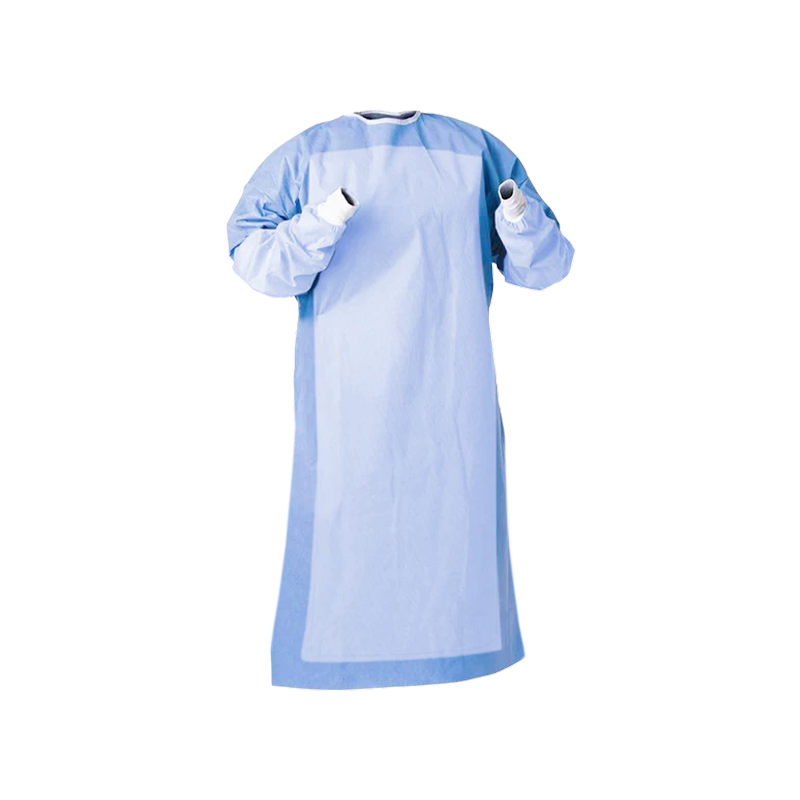 Custom Reinforced Surgical Gown for Invasive SurgeryCustomizable reinforced surgical gown with extra fabric in key areas, SMS or spunlace material, blue color, knitted cuffs and sizes S–XXL.View Product →
Four construction details that decide whether a lot passes incoming inspection
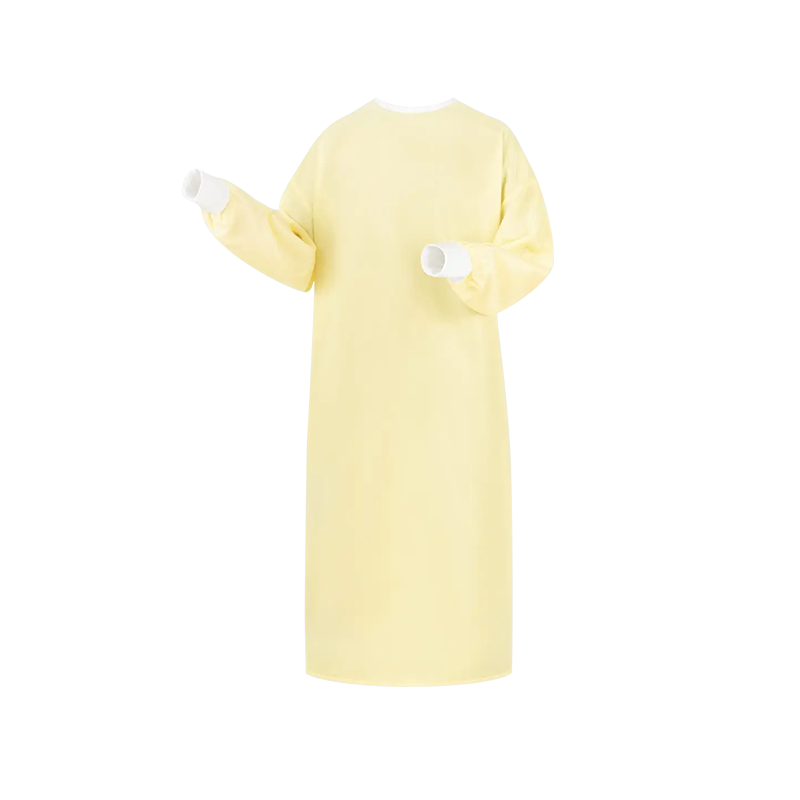 Custom Disposable Isolation Gown for Fluid Splash ProtectionCustomizable disposable isolation gown in SPP, SMS or PP+PE options, blue or yellow, knitted cuffs and sizes S–XXL for splash and soiling protection.View Product →
Documentation to request before a sample is even cut
 Universal Pack Customizable Sterile Surgical Pack for General SurgeryPre-assembled sterile general surgery pack with standard and reinforced gowns, drapes, covers, towels and SMS wrap; contents customizable to procedure requirements.View Product →
With the increasing emphasis on infection control and personnel protection in medical environments, disposable medical scrub suits play an increasingl...
READ MOREWhy are material quality and barrier protection crucial in a disposable cardiovascular surgical drape pack? The efficacy of disposable cardiovascular ...
READ MOREThe Importance of Disposable Obstetrics Drapes Packs In modern delivery practices, the disposable obstetrics drapes pack has become a crucial tool for...
READ MOREThe Critical Role of Medical Gowns in Healthcare In the dynamic and often hazardous environment of a healthcare facility, medical gowns serve as a pri...
READ MORE
 This website is intended for regions outside of China.