
 English
 中文简体
 Español

Industry News
Home / News / Industry News / Caesarean Pack Factory Guide: Sourcing Sterile C-Section Kits from China


 By Admin
Content
A purchasing manager at a maternity hospital once told me that a caesarean pack is not just a bundle of drapes. It is a sterile system that must perform in a 30-minute emergency. When you source from a caesarean pack factory, the first question is not price per unit. It is whether the factory can control the sterile barrier, trace every component, and deliver consistent batches. The second question is whether it understands the obstetric workflow. This article explains what matters and how to evaluate a factory.
A caesarean pack is a single-use surgical kit designed for C-section delivery. It typically includes a fenestrated drape, adhesive side drapes, a fluid collection pouch, umbilical cord clamp, suction tubing, gauze, and a surgical gown. The factory does not simply make each item in isolation. It assembles them into a sterile pack that must remain sterile until the moment of use. That means the production floor needs controlled environment, validated sealing, and a sterilization process—usually EO or gamma—that matches the pack's materials and intended shelf life.
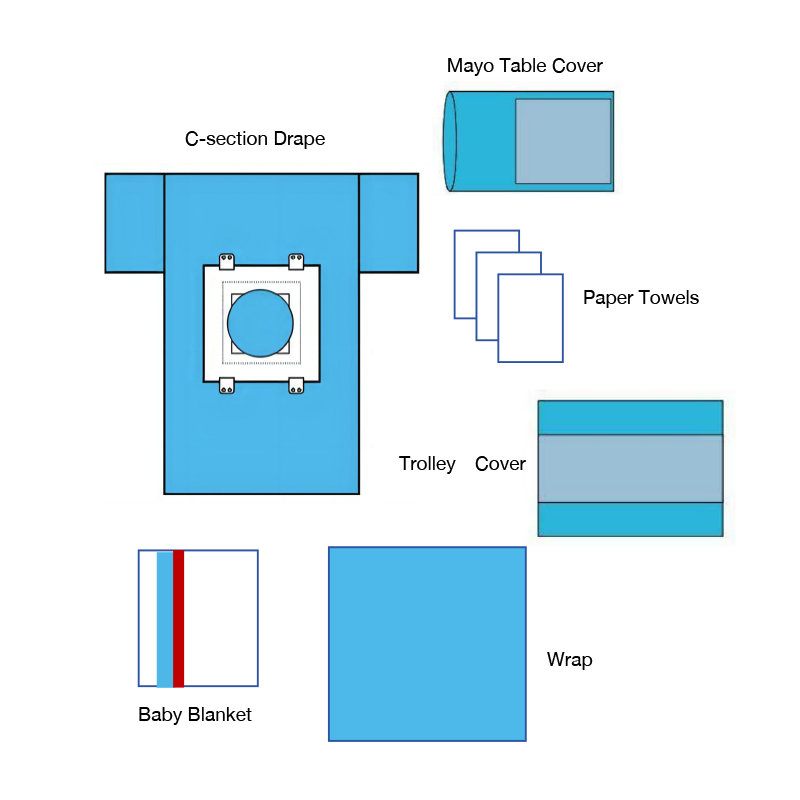 Custom Caesarean Pack for C-Section DeliverySingle-use obstetric surgical kit with C-section drape, reinforced gowns, covers, suture bag, baby blanket, towels, umbilical clamp, and SMS wrap; customizable.View Product →
Good factories also produce related obstetric packs, such as delivery packs for vaginal births. This lets them share components and quality controls across a product family. For a hospital, buying from a dedicated caesarean pack factory often means fewer suppliers, tighter batch consistency, and easier traceability when something goes wrong.
The sterile barrier is the most critical performance feature of any caesarean pack. If the drape wets through or the seal fails, the patient is exposed. Most C-section packs use non-woven materials such as SMS or SMMS for drapes, combined with PE film for fluid collection. The exact choice depends on the expected fluid volume, procedure duration, and whether the pack will be used in an emergency or an elective setting.
| Component | Function | Material or design consideration |
|---|---|---|
| Fenestrated drape | Exposes the surgical site | Fluid-resistant, low-lint, reinforced aperture |
| Adhesive side drape | Secures drape to patient | Skin-friendly adhesive, fluid barrier |
| Fluid collection pouch | Manages amniotic fluid and blood | Clear film, strong adhesion, graduated scale |
| Umbilical cord clamp | Clamps cord after delivery | Medical-grade plastic, single-use, sterile |
| Suction tubing | Removes fluids | Flexible, kink-resistant, connector compatibility |
| Surgical gown | Protects clinical team | AAMI Level 3 or 4, low lint |
| Sterile wrap | Maintains sterility | Non-woven, validated seal |
When evaluating a factory, ask for the material specifications and the test reports behind them. A factory that can explain why it chose a particular SMS weight for a C-section drape is more likely to control quality than one that only quotes a price. Also check how the factory handles the transition from drape to pouch. Leakage at that seam is a common complaint in low-cost packs.
Traceability is not a paperwork exercise. In a caesarean pack, every component—from the adhesive drape to the cord clamp—must be traceable to a raw material lot and a production batch. If a hospital reports a skin reaction or a seal failure, the factory should be able to identify the affected batches within hours, not weeks.
This is where a factory's incoming inspection matters. Suppliers of non-woven fabric, adhesive, and plastic components should be audited and their materials tested against incoming specifications. Batch records should link each pack to the operator, machine, sterilization cycle, and release decision. A good factory will also keep retention samples for the shelf life of the product.
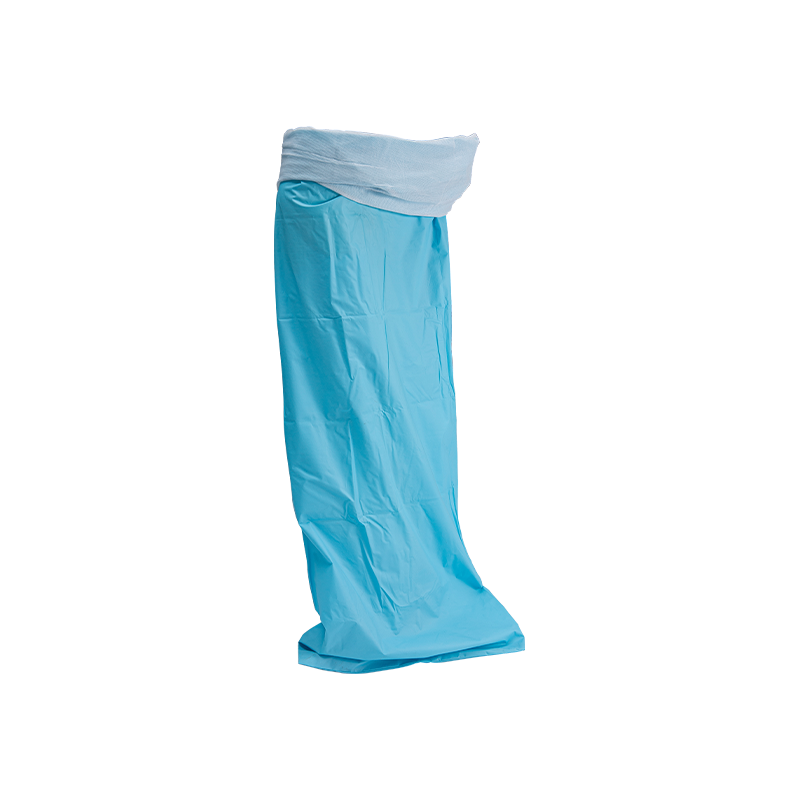 Custom TPE Stockinette for Surgical Pack AccessoriesCustomizable blue TPE stockinette in multiple sizes, listed as a surgical pack accessory intended for skin protection, fluid absorption, and pressure distribution.View Product →
Even small accessories, such as TPE stockinette sleeves used to position limbs or secure lines, need the same discipline. If the factory treats accessories as an afterthought, the whole pack's reliability suffers.
No two obstetric units work exactly alike. Some prefer a larger fenestration for emergency C-sections; others need a smaller drape for scheduled procedures. Some hospitals want the suction tubing pre-connected; others prefer it separate. A capable caesarean pack factory offers customization without sacrificing sterility or shelf life.
Customization usually covers component selection, drape size, folding method, and packaging. The folding method is especially important. A pack that opens incorrectly can contaminate the sterile field. Factories with experience in obstetric packs often have standard fold patterns for C-section and vaginal delivery, and they can adjust based on clinician feedback.
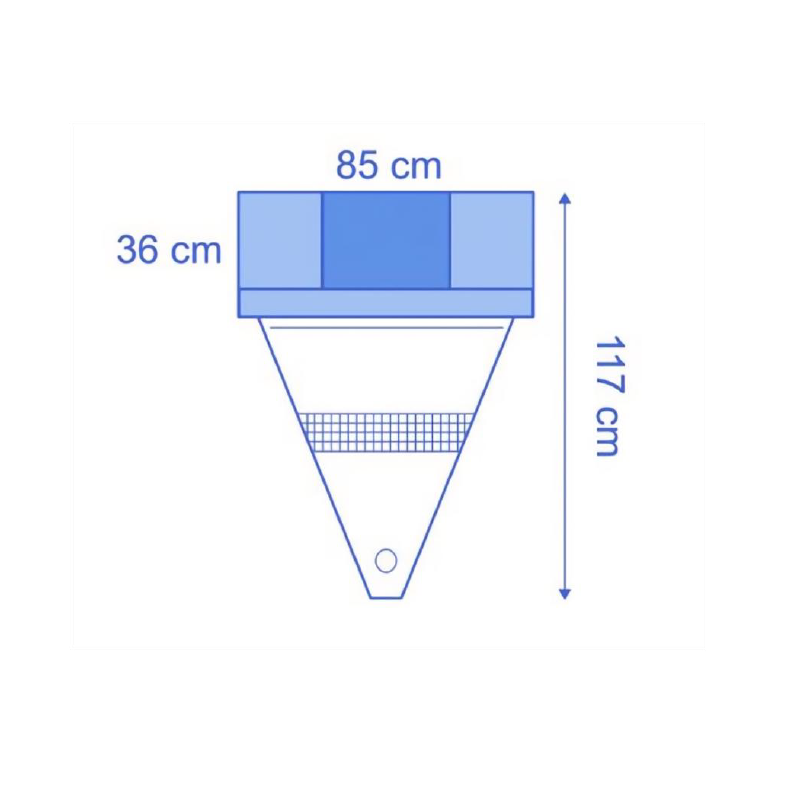 Custom Delivery Pack for Natural Childbirth ProceduresObstetrics pack with under-buttocks drape, reinforced side drape and gown, leggings, umbilical clamp, and SMS wrap; customizable for natural delivery.View Product →
If a factory also makes delivery packs, it understands the broader obstetric workflow. That knowledge shows up in details such as the position of the fluid pouch, the length of the umbilical cord clamp, and the way the gown is folded so the scrub nurse can don it without touching the outside.
A caesarean pack factory's real strength is its ability to repeat the same quality thousands of times. Jiangsu Dingshun Medical Products Co., Ltd., for example, describes a full-process management approach from raw material selection to final delivery. The company says it audits suppliers, tests incoming materials, and monitors each batch against defined quality indicators. It also claims a dedicated R&D team and a technical service team that can develop new products with a better cost-performance balance.
These claims are common in the industry, so they need verification. Ask for the factory's most recent audit report, a batch record example, and a list of countries where the product is registered. A factory that has supplied markets such as North America, Europe, Japan, and South Korea has likely faced rigorous regulatory reviews. That history is a useful signal, though not a substitute for your own due diligence.
Delivery capacity also depends on how the factory manages its supply chain. A factory that produces its own knitted components—cuffs, stockinette, and bands—has more control over lead times than one that outsources everything. If the factory has a factory tour program, take it. Seeing the cutting floor, sealing machines, and sterilization area tells you more than a brochure.
Choosing a caesarean pack factory is a decision about risk. The lowest price per pack may look attractive, but the cost of a sterile barrier failure is measured in patient harm and recalls. Focus on material specifications, traceability, sterilization validation, and clinical fit. A factory that can explain its choices, open its records, and adapt to your obstetric workflow is the one worth a long-term contract.
With the increasing emphasis on infection control and personnel protection in medical environments, disposable medical scrub suits play an increasingl...
READ MOREWhy are material quality and barrier protection crucial in a disposable cardiovascular surgical drape pack? The efficacy of disposable cardiovascular ...
READ MOREThe Importance of Disposable Obstetrics Drapes Packs In modern delivery practices, the disposable obstetrics drapes pack has become a crucial tool for...
READ MOREThe Critical Role of Medical Gowns in Healthcare In the dynamic and often hazardous environment of a healthcare facility, medical gowns serve as a pri...
READ MORE
 This website is intended for regions outside of China.