
 English
  中文简体
中文简体  Español
Industry News
With the increasing emphasis on infection control and personnel protection in medical environments, disposable medical scrub suits play an increasingl...
READ MORE

 By Admin
Content
In the meticulously controlled environment of an operating room, maintaining a sterile field is non-negotiable. Surgical drapes are the first line of defense, creating a critical barrier against microbial migration and fluid strike-through. For decades, the standard approach involved a vast array of procedure-specific drapes—one for general laparotomy, another for orthopedic knee surgery, a different one for a C-section. While effective, this paradigm leads to complex inventory management, increased storage needs, and potential for preparation errors. Enter the concept of the surgical drape universal: a versatile, adaptable solution designed to streamline processes without compromising safety. These drapes are engineered with intelligent features—such as strategic fenestrations (openings), integrated pouches, and advanced adhesive systems—that allow them to be effectively configured for a wide range of surgical procedures. From managing fluids in obstetric deliveries to securing a sterile field around a limb or the delicate eye area, universal drapes represent a shift towards efficiency and standardization. This article delves into the core advantages of universal drapes, explores specialized variations like the universal surgical drape with pouches and the universal c-section drape with absorbent fenestration, and examines key considerations for their selection and use, providing a comprehensive guide for healthcare professionals seeking to optimize their surgical protocols.
The primary appeal of a surgical drape universal lies in its multifunctionality and the operational efficiency it brings to the perioperative setting. By consolidating the needs of multiple procedures into a single, well-designed product, these drapes significantly reduce the number of SKUs a hospital must stock and manage. This simplification translates to lower inventory costs, less storage space required, and a reduced environmental footprint associated with manufacturing and transporting numerous specialty items. For clinical staff, it minimizes the risk of grabbing the wrong drape in a time-sensitive situation and shortens setup time. Importantly, a high-quality universal drape does not represent a compromise. It is constructed from advanced composite materials that meet or exceed the same rigorous standards for fluid resistance, lint generation, and barrier protection as their procedure-specific counterparts. The key is in the thoughtful design of modular features—such as fenestration placement, reinforcement zones, and accessory integration points—that provide the necessary adaptability.
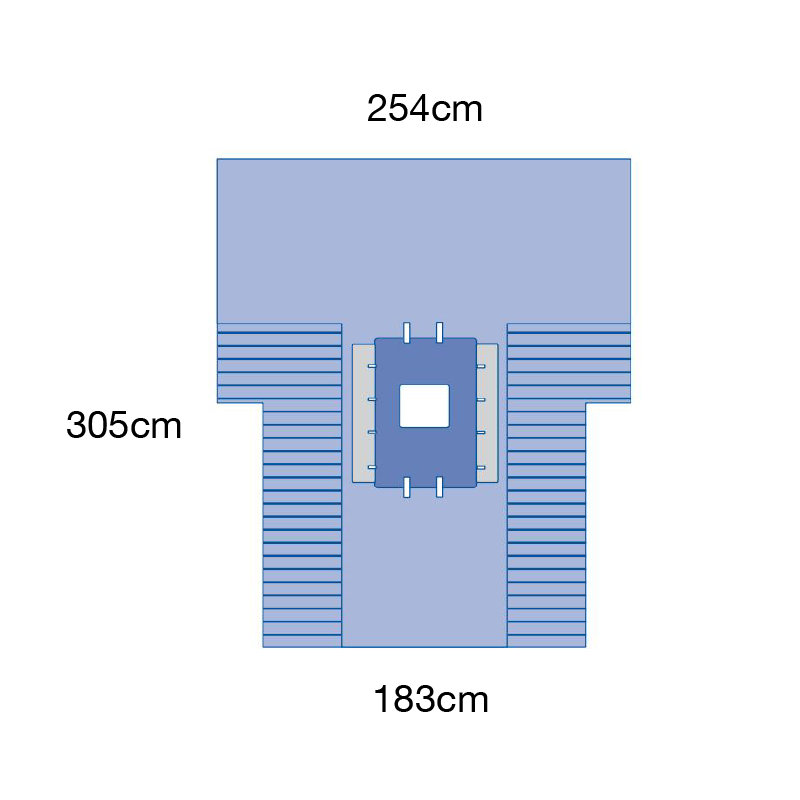
While "universal" implies broad applicability, the most effective designs incorporate specialized features to address the unique challenges of specific surgical disciplines. These are not custom drapes for a single procedure, but rather intelligent, adaptable platforms optimized for a category of surgeries. The evolution of the surgical drape universal has led to targeted variations that solve distinct problems, such as fluid management in wet surgical fields or securing a sterile barrier around mobile extremities. Understanding these variations is crucial for surgical teams to select the most effective drape for their needs, ensuring that the benefits of universality are fully realized without sacrificing procedural-specific performance.
A universal surgical drape with pouches integrates one or more fluid collection bags directly into the drape sheet. This design is invaluable in procedures where significant irrigation or fluid runoff is expected. The pouches, typically located below the fenestration, serve as a reservoir to collect blood, saline, and other fluids, preventing them from pooling on the floor, soaking through the drapes, or contaminating the sterile field. This not only maintains a cleaner and safer operating environment but also helps in accurate fluid loss measurement. The universal aspect means the pouch placement and drape size are designed to be effective for a range of abdominal, pelvic, or urological procedures where fluid management is a priority.
The universal c-section drape with absorbent fenestration is a prime example of targeted universal design. While adaptable for various obstetric and gynecological surgeries, its key feature is a large, specially designed fenestration surrounded by a super-absorbent border. This border rapidly wicks away amniotic fluid and blood immediately upon delivery, keeping the newborn's immediate environment drier and reducing the risk of fluid contact with healthcare providers. The drape often includes a built-in under-buttocks pouch for further fluid collection and is sized to accommodate the full surgical field for a Cesarean section, including areas for instrument tables.
| Feature | Benefit in C-Section |
| Super-Absorbent Fenestration Border | Instant management of amniotic fluid and blood upon uterine incision and delivery. |
| Integrated Under-Buttocks Pouch | Collects continuous fluid runoff, protecting the operating table and floor. |
| Large, Generous Size | Covers the wide surgical field from the mother's chest to her knees and across the instrument stands. |
| Universal Design | Can also be used for other major gynecological surgeries like hysterectomies. |
Orthopedic procedures on arms and legs present the challenge of draping a cylindrical, often mobile, limb. A universal extremity drape for orthopedic surgery solves this with a dedicated design that typically includes a tubular stockinette extension or a drape sheet with a sealed limb aperture. The limb is passed through this opening, and the drape is then secured proximally, often with an integrated adhesive strip or a snug-fitting cuff, to prevent migration and maintain sterility even with manipulation during surgery. This creates a closed, waterproof barrier from the limb to the main body drape, essential for procedures involving tourniquets or large volumes of irrigation.
Ophthalmic surgery demands an impeccable sterile field in a very confined area. A universal drape for ophthalmic surgery is meticulously designed to conform to the contours of the face and orbit. Key features often include a transparent incise film over the eye area for clear visualization, adhesive strips to secure eyelids and lashes away from the surgical site, and a low-lint, static-reducing material to prevent microscopic debris from interfering with the procedure. Its universal nature allows it to be used for a variety of surgeries like cataract, glaucoma, or retinal procedures.
A critical component of any surgical drape's effectiveness is its ability to stay securely in place for the duration of the procedure. Migration or wrinkling of the drape can compromise the sterile field. This is where the universal incise drape adhesive plays a pivotal role. An incise drape is a transparent, adhesive film that is applied directly over the prepped skin at the surgical site, and the main drape fenestration is placed over it. The quality and formulation of this adhesive are paramount.
High-performance adhesives are designed to be aggressively tacky yet gentle on the skin. They must create an immediate and durable bond to various skin types, even in the presence of moisture from surgical prep solutions. The adhesive should be hypoallergenic to minimize the risk of postoperative skin reactions and should allow for clean, residue-free removal without causing trauma or leaving adhesive behind. A reliable universal incise drape adhesive forms a seamless microbial seal at the skin-drape interface, significantly reducing the risk of endogenous wound contamination from skin flora.
Yes, when designed and manufactured to high standards, a modern surgical drape universal can be equally effective. The key lies in its intelligent design, which incorporates the most critical protective features needed across multiple procedures—such as high-level fluid barrier protection, adequate sizing, and strategically placed reinforcement. For most common surgeries, a well-chosen universal drape provides an identical sterile barrier. The advantage is the reduction in inventory complexity without a sacrifice in core protective performance.
When selecting a universal surgical drape with pouches, evaluate several factors: the pouch's capacity and its placement relative to the fenestration to ensure it will effectively catch runoff from your typical procedures. Check the seal integrity of the pouch to prevent leaks. Also, consider the drape's overall fluid barrier rating (AAMI PB70 Level 4 is the highest) and the transparency of the pouch if you need to monitor fluid volume visually. Ensure the drape material is strong enough to support the weight of a full pouch without tearing.
The universal c-section drape with absorbent fenestration directly enhances safety and efficiency. By instantly absorbing the large volume of amniotic fluid released during delivery, it minimizes the exposure of the newborn and surgical team to potentially infectious bodily fluids. It also keeps the surgical instruments and gloves drier, which improves grip and reduces the risk of contamination. A drier field allows for better visualization and can contribute to a more controlled and efficient surgical procedure.
While some universal drapes have a built-in adhesive fenestration, using a separate universal incise drape adhesive film is often considered best practice. The dedicated incise drape provides a superior, transparent seal directly on the skin, creating an optimal barrier against bacteria from the patient's own skin. It also ensures a smooth, stable surface for the main drape to adhere to, preventing wrinkling and fluid wicking. For optimal aseptic technique, the combination of a high-quality incise drape and a universal over-drape is recommended.
A well-designed universal drape for ophthalmic surgery is suitable for the vast majority of procedures, including cataract, refractive, glaucoma, and vitreoretinal surgery. Its universal design focuses on the common needs: excluding eyelashes, managing minute fluids, and providing a clear, lint-free operative field. For extremely specialized or unconventional orbital procedures, a consultation with the drape manufacturer may be advised to confirm suitability, but for standard intraocular surgery, a universal ophthalmic drape is typically the standard of care.
With the increasing emphasis on infection control and personnel protection in medical environments, disposable medical scrub suits play an increasingl...
READ MOREWhy are material quality and barrier protection crucial in a disposable cardiovascular surgical drape pack? The efficacy of disposable cardiovascular ...
READ MOREThe Importance of Disposable Obstetrics Drapes Packs In modern delivery practices, the disposable obstetrics drapes pack has become a crucial tool for...
READ MOREThe Critical Role of Medical Gowns in Healthcare In the dynamic and often hazardous environment of a healthcare facility, medical gowns serve as a pri...
READ MORE
 This website is intended for regions outside of China.