
 English
  中文简体
中文简体  Español
Industry News
With the increasing emphasis on infection control and personnel protection in medical environments, disposable medical scrub suits play an increasingl...
READ MORE

 By Admin
Content
In the modern medical landscape, the choice of Personal Protective Equipment (PPE) has evolved from a simple logistical decision into a strategic priority that impacts patient safety, environmental health, and hospital budgeting. The adoption of Reusable Medical Gowns has seen a significant resurgence as healthcare facilities seek to balance rigorous infection control with fiscal responsibility. These garments are engineered to withstand multiple sterilization cycles while maintaining their protective integrity, offering a robust alternative to single-use disposables that often dominate the waste stream. By integrating advanced textile technology, these gowns provide a barrier against pathogens that is both reliable and comfortable for healthcare professionals working long shifts in high-pressure environments.
Safety is the cornerstone of any clinical setting, and high-quality protective apparel is the first line of defense. Unlike many disposable options that may tear easily or provide inconsistent barrier protection, modern reusable textiles are woven with high-density fibers designed for durability. These gowns undergo rigorous testing to ensure they meet international safety benchmarks. The transition to a reusable system allows facilities to invest in higher-quality materials that offer better breathability and fit, which significantly reduces the risk of self-contamination during doffing. Furthermore, the standardized manufacturing of these gowns ensures that every practitioner receives the same level of protection, regardless of the batch, fostering a culture of safety and reliability across various departments, from the emergency room to outpatient clinics.
Navigating the complexities of medical apparel requires a deep understanding of the ANSI/AAMI PB70 standard levels. This classification system is essential for determining the appropriate level of protection required for specific clinical tasks, ranging from Level 1 for basic care to Level 4 for high-risk surgical interventions. Reusable gowns are specifically engineered to meet these standards consistently. For instance, Level 3 gowns must demonstrate high resistance to liquid penetration in both the "Impact Penetration" and "Hydrostatic Pressure" tests. By adhering to these standardized levels, healthcare administrators can ensure that their staff is equipped with the precise barrier protection needed for their specific exposure risks, thereby minimizing occupational hazards and enhancing the overall quality of care provided to patients.
| Protection Level | Typical Application | Liquid Barrier Requirement |
| Level 1 | Standard Isolation | Minimal fluid resistance |
| Level 2 | ICU / Emergency Room | Water resistance (Impact Penetration) |
| Level 3 | Surgical Procedures | Water resistance (Hydrostatic Pressure) |
The healthcare industry is one of the largest contributors to global waste, and the move toward Sustainable Healthcare PPE Solutions is no longer optional---it is a necessity. Conventional disposable systems generate tons of plastic waste that end up in landfills or incinerators, releasing harmful toxins into the atmosphere. Reusable systems, however, utilize a circular economy model where a single gown can replace dozens of disposable units over its lifespan. This shift not only reduces the carbon footprint associated with manufacturing and transport but also alleviates the pressure on waste management systems. Institutions that prioritize sustainability often find that it enhances their community reputation and aligns with global health initiatives aimed at reducing the environmental determinants of disease.
Implementing Eco-friendly hospital isolation gowns is a direct way to combat the environmental crisis within the medical sector. These gowns are typically made from polyester or poly-cotton blends that can be recycled at the end of their functional life. When comparing the ecological footprint, one must consider the entire lifecycle: from the raw material extraction and water usage in manufacturing to the energy required for laundering. Studies have shown that even when accounting for the water and energy used in industrial washing, reusables still offer a more favorable environmental profile than disposables. This is largely due to the massive reduction in resource extraction and the avoidance of plastic-based pollution that characterizes the single-use market, making eco-friendly gowns a vital component of a resilient healthcare infrastructure.
| Environmental Factor | Disposable Gowns | Eco-friendly Reusable Gowns |
| Waste Generation | High (Single-use landfill) | Low (Multi-year usage) |
| Carbon Footprint | High (Continuous production) | Lower (Lifecycle efficiency) |
| Material Source | Plastic/Petrochemicals | Recyclable Synthetics/Blends |
While the initial purchase price of a reusable garment is higher than a single-use alternative, the long-term financial benefits are undeniable. Strategic procurement focuses on the "cost-per-use" rather than the "cost-per-unit." Over the course of 50 to 100 wash cycles, the expense of a reusable gown drops significantly below the cumulative cost of buying, storing, and disposing of an equivalent number of disposable gowns. Furthermore, reusable systems provide a hedge against market volatility and supply chain shortages, which were notoriously problematic during recent global health crises. By maintaining an in-house or contracted inventory of reusables, hospitals can ensure steady availability and predictable pricing, protecting their bottom line from the price gouging and scarcity often associated with the disposable PPE market.
The decision to invest in Cost-effective reusable surgical gowns is supported by comprehensive cost-benefit analyses. Hospital administrators must look at the total cost of ownership, which includes the purchase price, laundering costs, and disposal fees. When these variables are calculated, reusables often emerge as the more economical choice for high-volume facilities. Beyond direct costs, the quality of these gowns often leads to higher staff satisfaction; the fabric is more comfortable, less prone to causing heat stress, and feels more like traditional clothing. This can lead to indirect savings through improved staff performance and reduced turnover. By choosing high-durability fabrics, facilities ensure that their investment lasts as long as possible, maximizing the ROI of every garment in their inventory.
| Cost Category | Disposable Strategy | Cost-effective Reusable Strategy |
| Unit Purchase | Low ($1 - $3) | Higher ($20 - $50) |
| Cost Per Use | Same as purchase | Calculated at $0.50 - $0.80 |
| Waste Disposal | Significant Expense | Negligible |
The success of a reusable program hinges on the quality of its maintenance. Proper care ensures that the protective barriers remain intact and that the garments are free from pathogens after every wash. This requires a partnership with specialized industrial laundries that understand the nuances of medical textiles. These facilities use specific chemical formulations and temperature controls to achieve high-level disinfection without degrading the fabric fibers. Regular inspections are also a critical component of compliance; gowns must be checked for thinning, holes, or failing seams. By treating medical gowns as a technical asset rather than a consumable commodity, healthcare providers can extend the life of their PPE while guaranteeing the safety of their clinical environment through disciplined quality control measures.
Standardized Laundering protocols for medical gowns are vital for maintaining the efficacy of the fluid-resistant finish and the overall structural integrity of the garment. These protocols typically follow CDC and OSHA guidelines, ensuring that thermal and chemical disinfection occurs during the wash cycle. For example, maintaining a water temperature of at least 160°F (71°C) for a minimum of 25 minutes is a common standard for eliminating microbial loads. Additionally, the use of pH-neutral detergents helps prevent the breakdown of the specialized coatings that provide liquid resistance. Following these best practices not only ensures patient and staff safety but also protects the facility's investment by ensuring the gowns reach their maximum possible lifespan without premature degradation of their protective qualities.
| Protocol Phase | Requirement | Safety Outcome |
| Wash Temperature | 160°F / 71°C | Thermal Disinfection |
| Chemical Action | PH-Balanced Detergents | Fabric Longevity |
| Inspection | Visual & Light Table | Barrier Integrity Assurance |
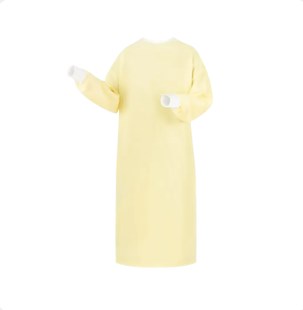
Most high-quality reusable gowns are designed to last between 50 and 100 industrial wash cycles. The exact number depends on the fabric composition and the specific laundering protocols for medical gowns used by the facility. Utilizing RFID tracking allows hospitals to retire gowns exactly when they reach their tested limit, ensuring that safety is never compromised for the sake of longevity.
Yes, they are often safer and more consistent. Reusable gowns must meet the same ANSI/AAMI PB70 standard levels as disposables. Because they are made from higher-grade materials to survive washing, they often have higher tear resistance and more reliable seam construction than their single-use counterparts, providing a more robust physical barrier during medical procedures.
While the initial investment is higher, the cost-per-use of a reusable gown is typically 25% to 50% lower than a disposable one. When you factor in the reduction in medical waste disposal costs---which are charged by weight---the savings for a large hospital can reach hundreds of thousands of dollars annually, making sustainable healthcare PPE solutions a smart financial decision.
Switching to reusables can reduce a facility's total surgical waste by up to 80%. Since disposables are often made of plastic-based non-wovens, they take centuries to decompose. Reusables significantly lower the volume of "red bag" biohazard waste, which is expensive to treat and dispose of, thereby reducing the hospital's overall environmental footprint.
With the increasing emphasis on infection control and personnel protection in medical environments, disposable medical scrub suits play an increasingl...
READ MOREWhy are material quality and barrier protection crucial in a disposable cardiovascular surgical drape pack? The efficacy of disposable cardiovascular ...
READ MOREThe Importance of Disposable Obstetrics Drapes Packs In modern delivery practices, the disposable obstetrics drapes pack has become a crucial tool for...
READ MOREThe Critical Role of Medical Gowns in Healthcare In the dynamic and often hazardous environment of a healthcare facility, medical gowns serve as a pri...
READ MORE
 This website is intended for regions outside of China.